



Now I practise Ashtanga at 6AM, most days of the week. However, the first time I walked into the Ashtanga yoga studio in Berlin, I had socks on and a water bottle in my hand. I didn't even know that there were different types of yoga asana (i.e., Sanskrit for 'posture') practise.
With a chuckle, my teacher told me that drinking water during the practise is not a thing. And well, socks: "We don't practise with socks." So here is how I came to yoga.
In August 2024, I came across a video of Laruga Glaser, practising Ashtanga (see here). Her profound focus in her eyes, visible calmness of her mind, and simultaneous deep Ujayi (i.e., Sanskrit for 'ocean') breath while practising what looked like an ecstatic form of gymnastics, entraced me beyond measure. I immediately read into what this thing, 'Ashtanga yoga', even was. Ashtanga yoga, consists of multiple predetermined series of asanas that is to be practised successively (i.e., learning one asana at a time, and mastering one sequence before moving to the next) over and over. ow could I, too, learn this practise and cultivate such a profound peace of mind?
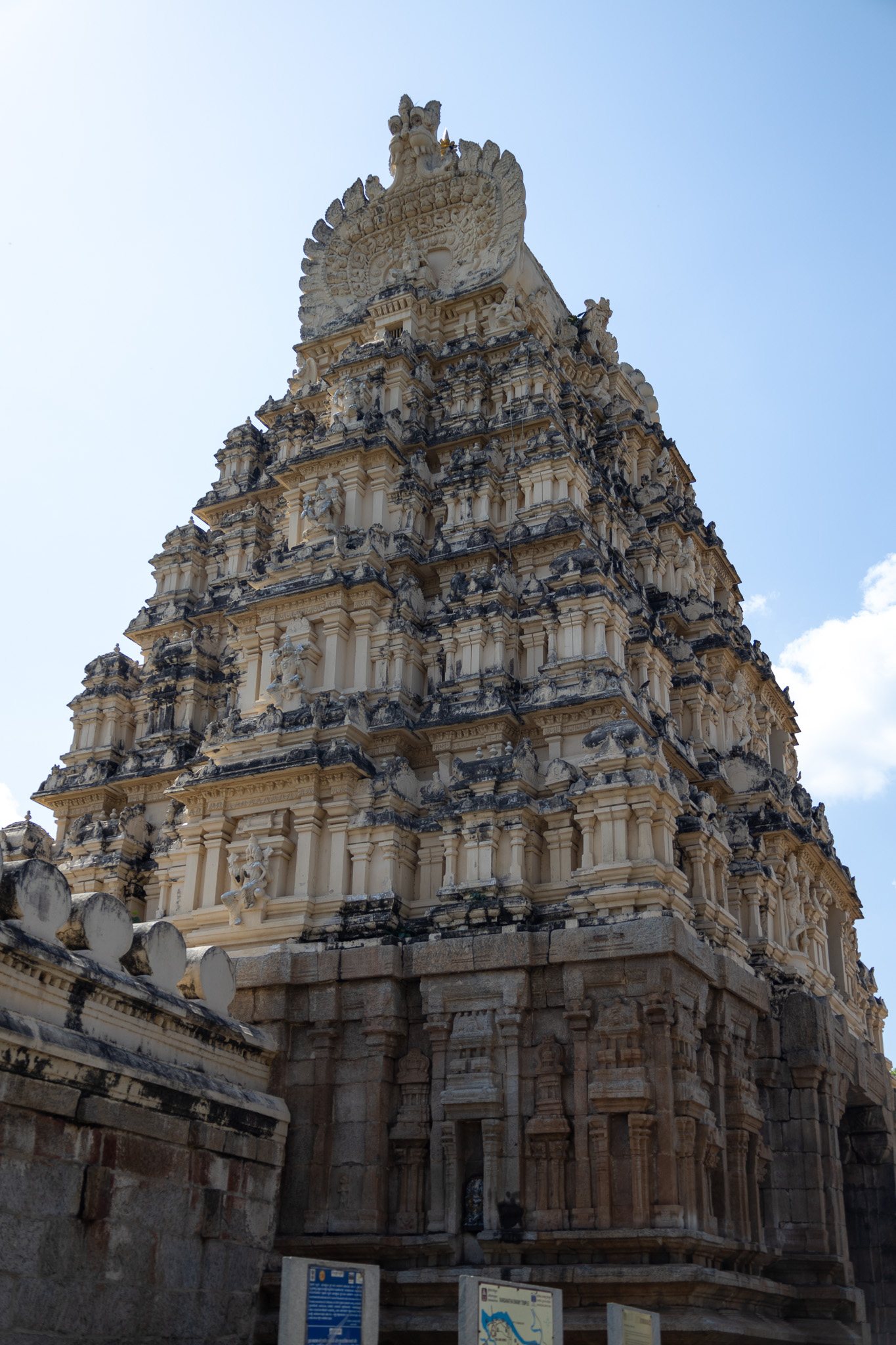
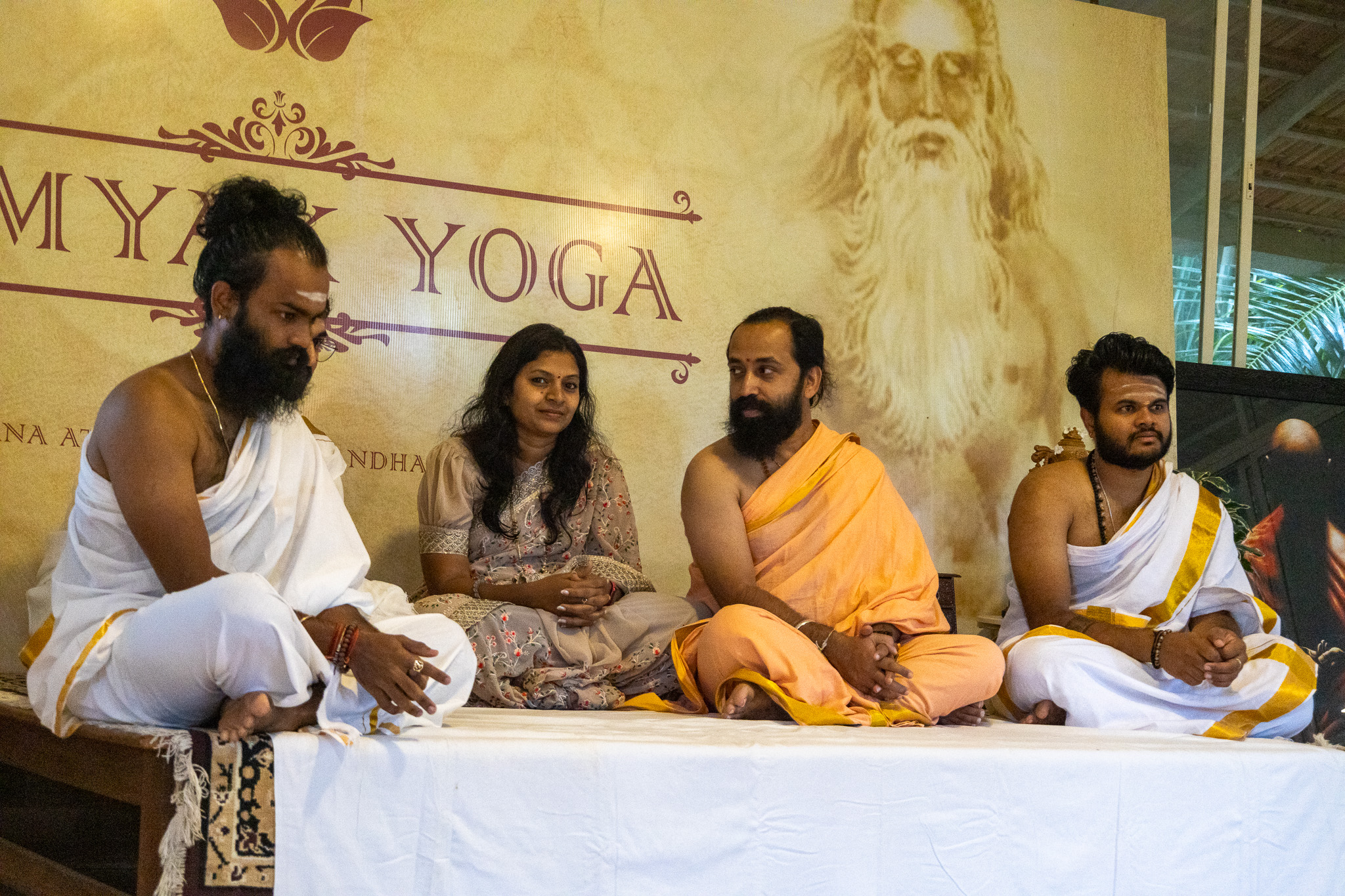
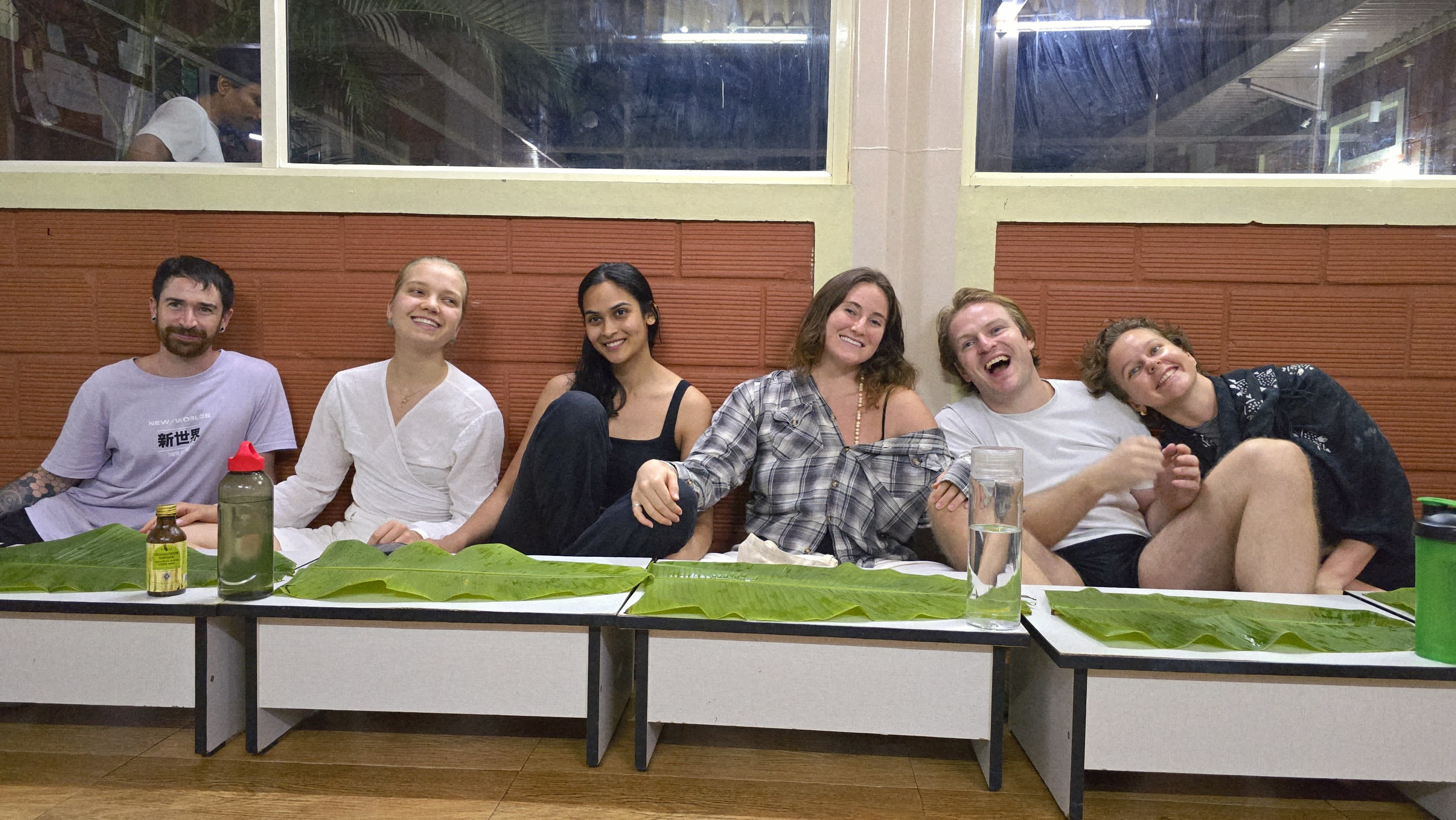
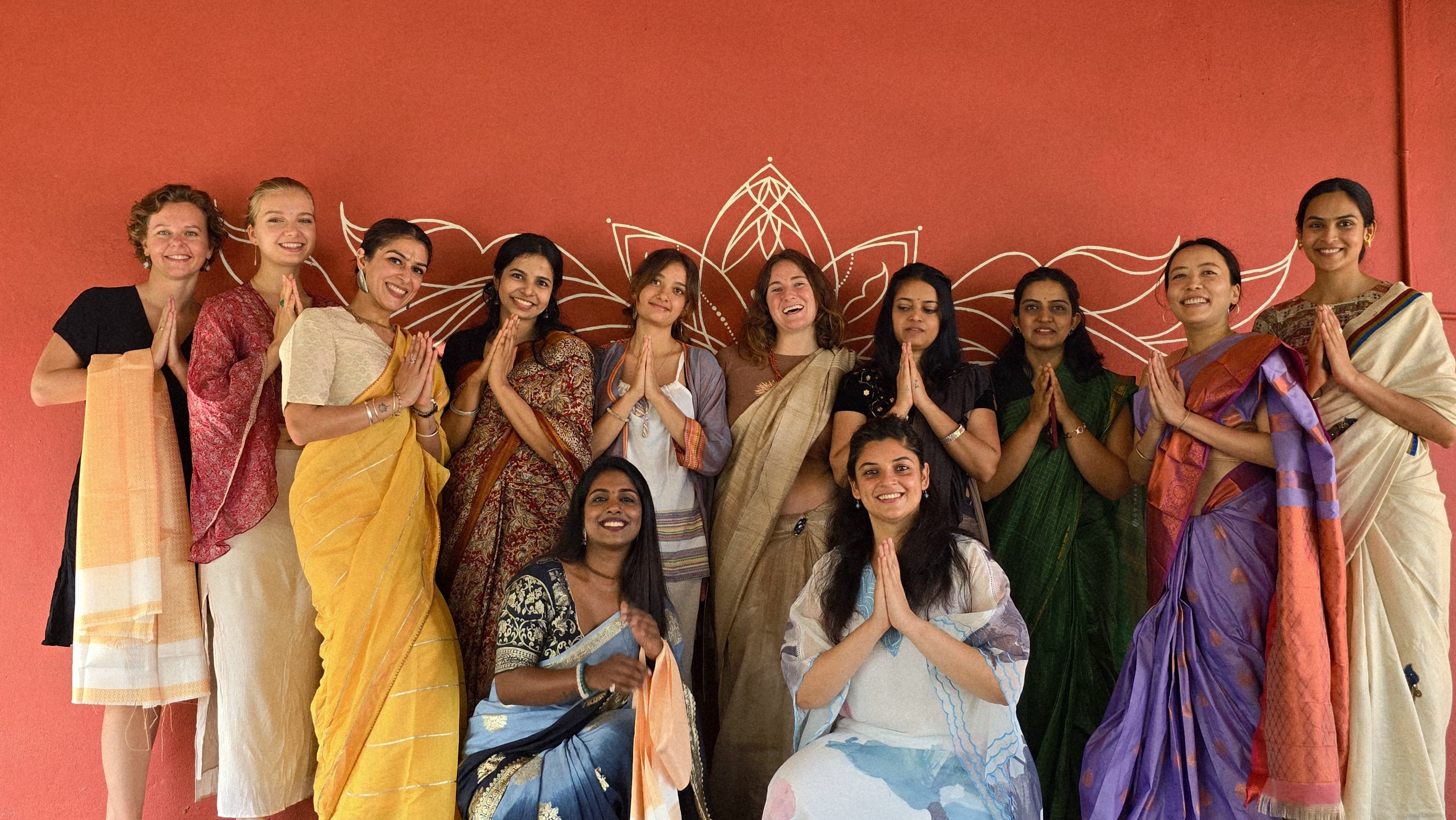
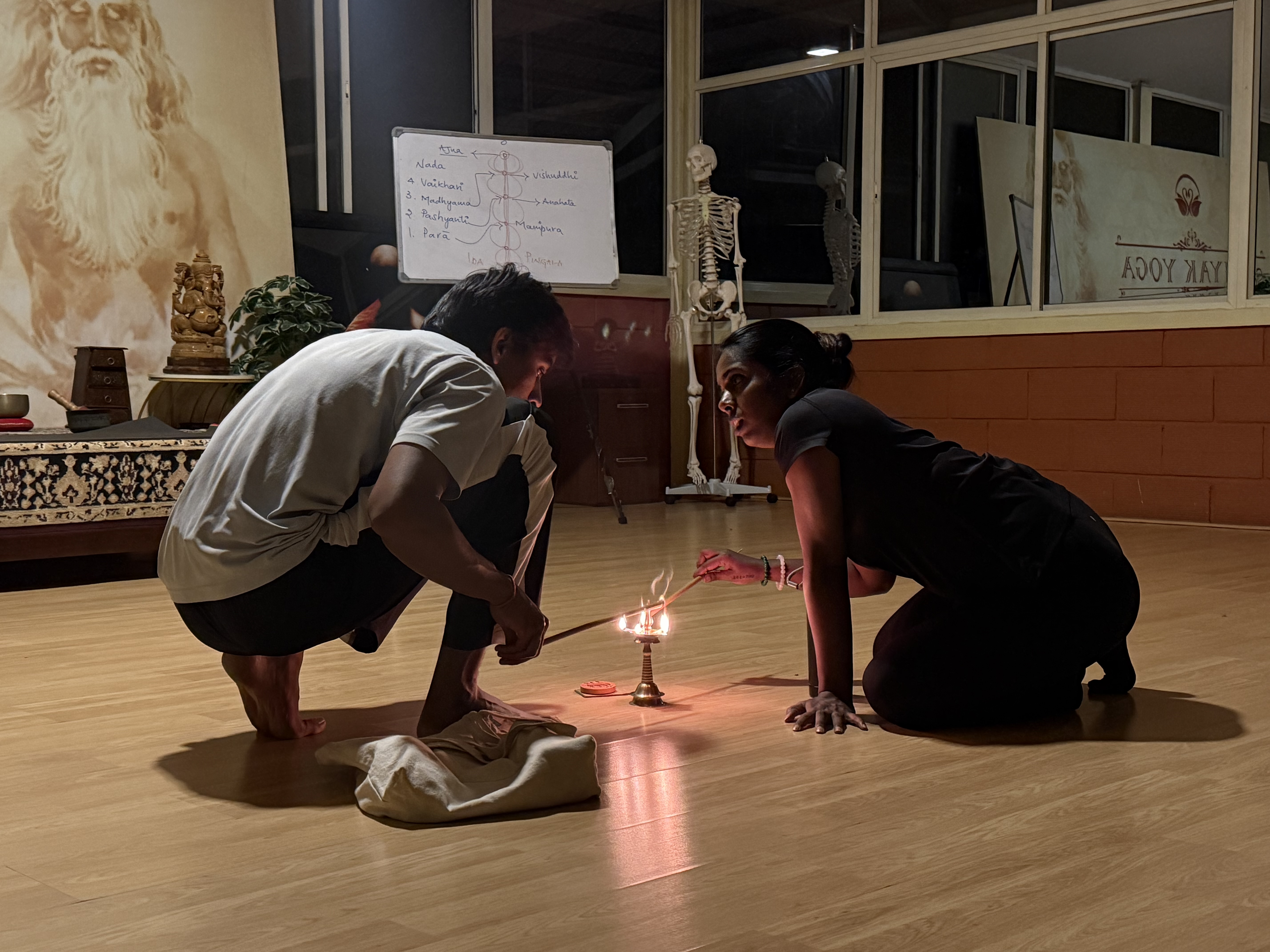
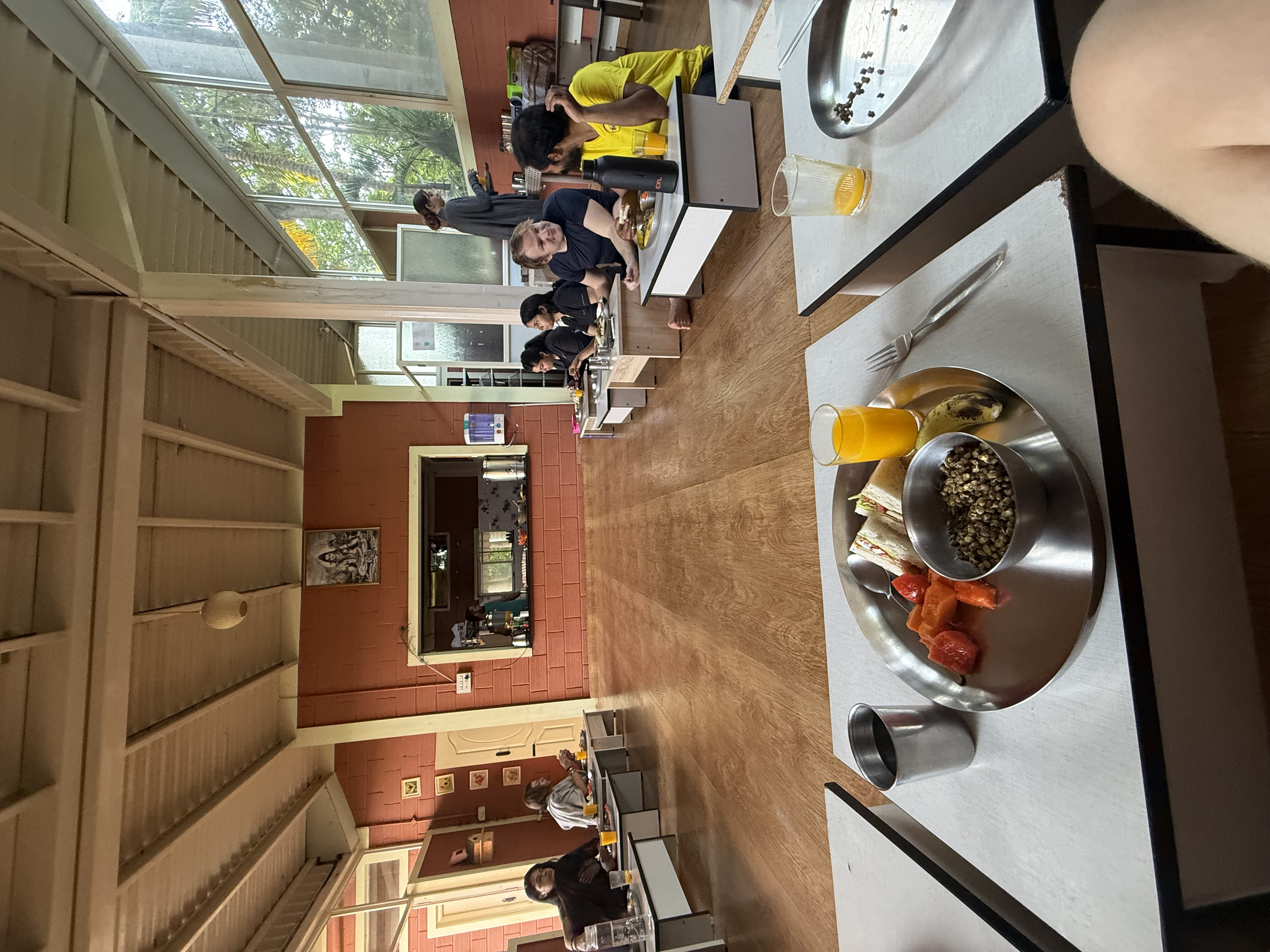
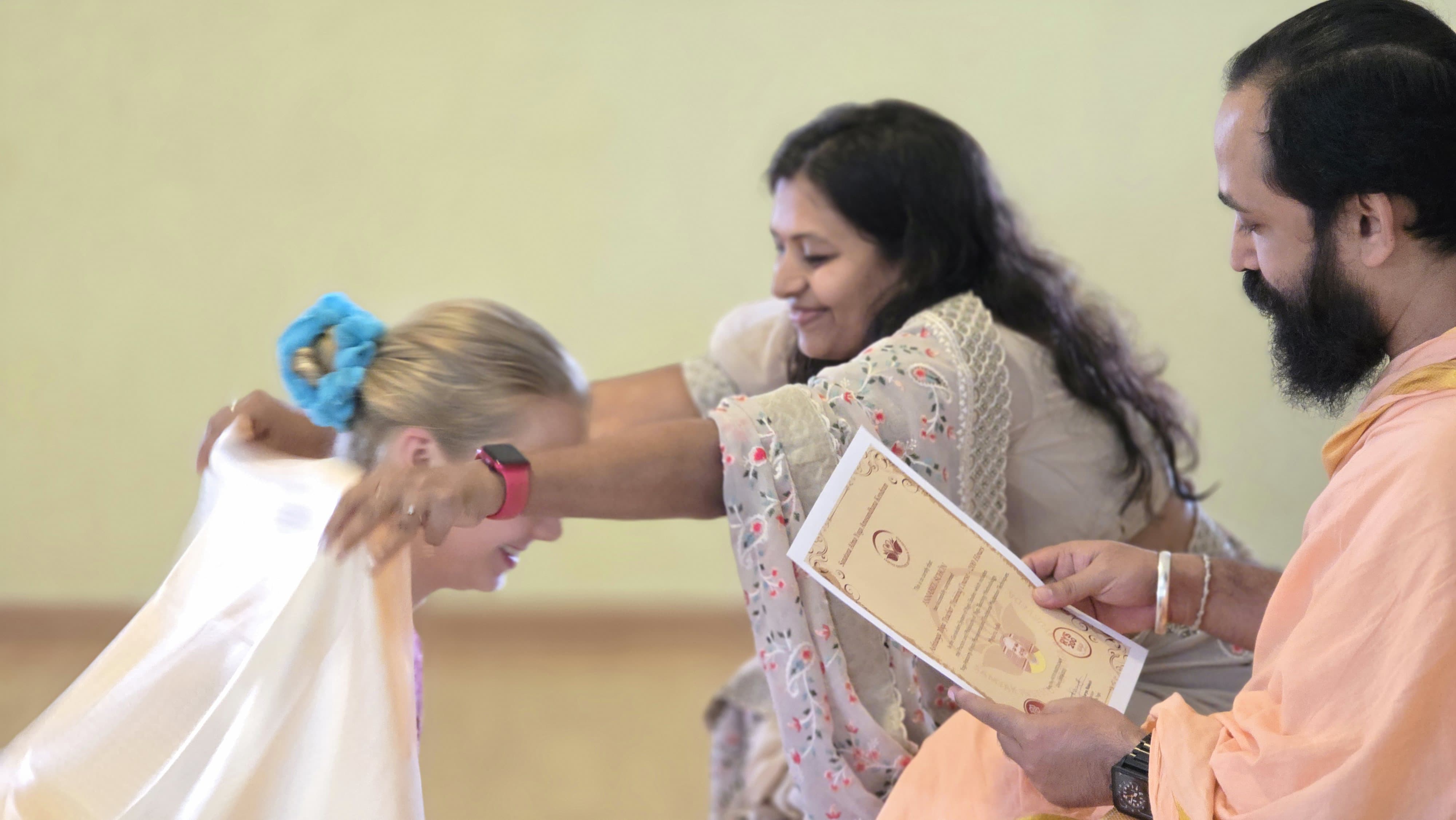
A year later, after falling in love with my yoga practise in a Mysore studio during my time in Berlin, I joined a month-long Ashtanga Yoga teacher training in Mysore at Samyak Yoga Institute of Yoga and Aryuveda. A day looked at following:
- Wake up 5:30.
- Practise Ashtanga primary series 6-7:30AM.
- 7:40-8:30 Pranayama and Meditation.
- 8:30-9:30 Breakfast and break.
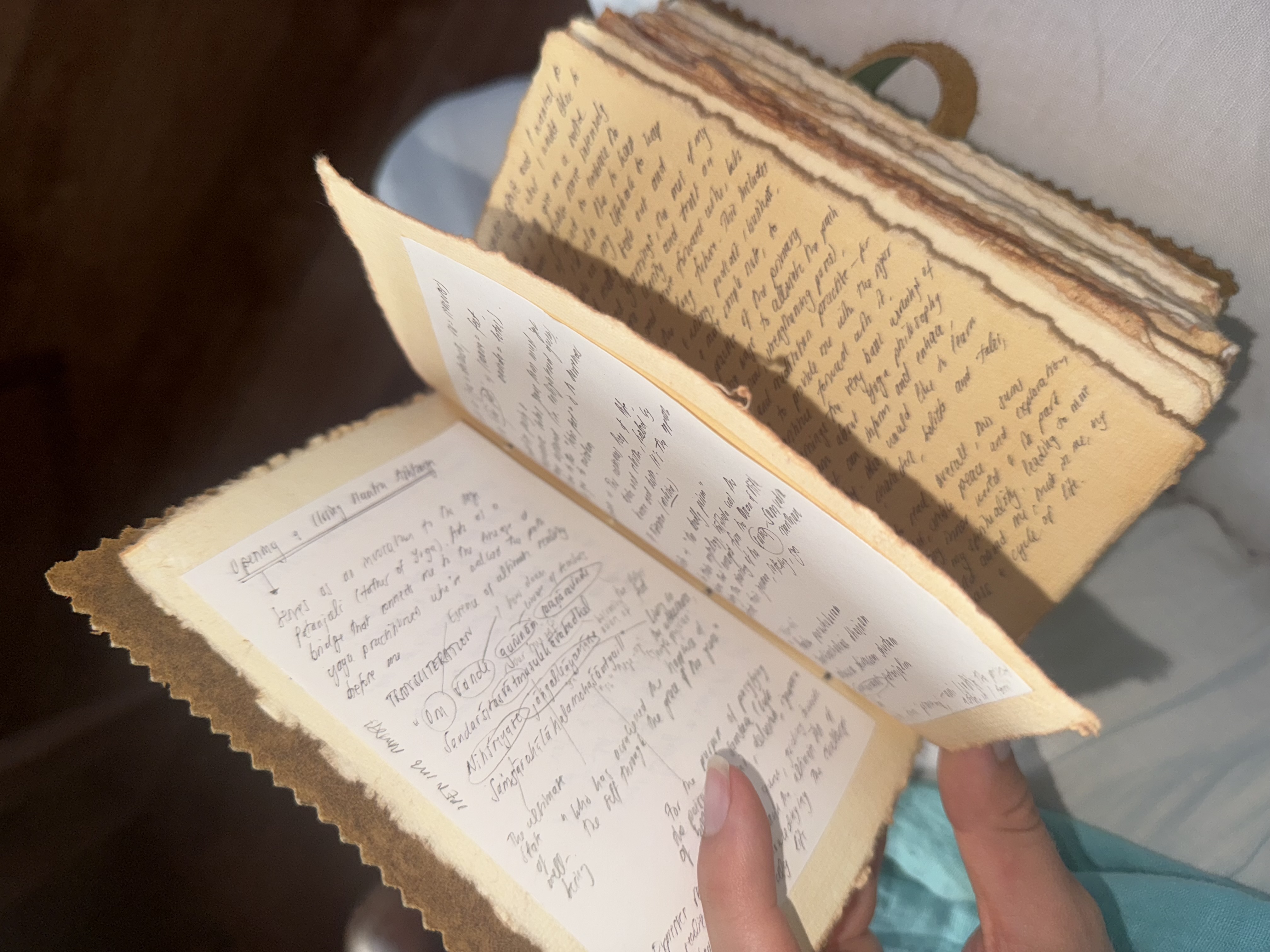
- 9:30-11 Yoga philosophy class.
- 11-12:30 Asana clinic, practising specific postures in more depth.
- 12:30-15:00 Lunch break and rest.
- 15:00-17:00 Asana clinic.
- 17-18:30 Philosophy.
- Dinner and sleep.
Ashtanga yoga takes its name from the "eight limbs" (ashta = eight, anga = limb) described in Patanjali's Yoga Sutras, and in its modern form it was developed and taught by Sri K. Pattabhi Jois in Mysore, India, drawing on the teachings of his own guru, Krishnamacharya. It is traditionally taught "Mysore-style": a room full of practitioners moving through their own memorized sequence at their own pace, while the teacher moves between mats offering individual adjustments.