


%20(1).jpg)
.jpg)
.jpg)
.jpg)
%20(1).jpg)
%20(1).jpeg)
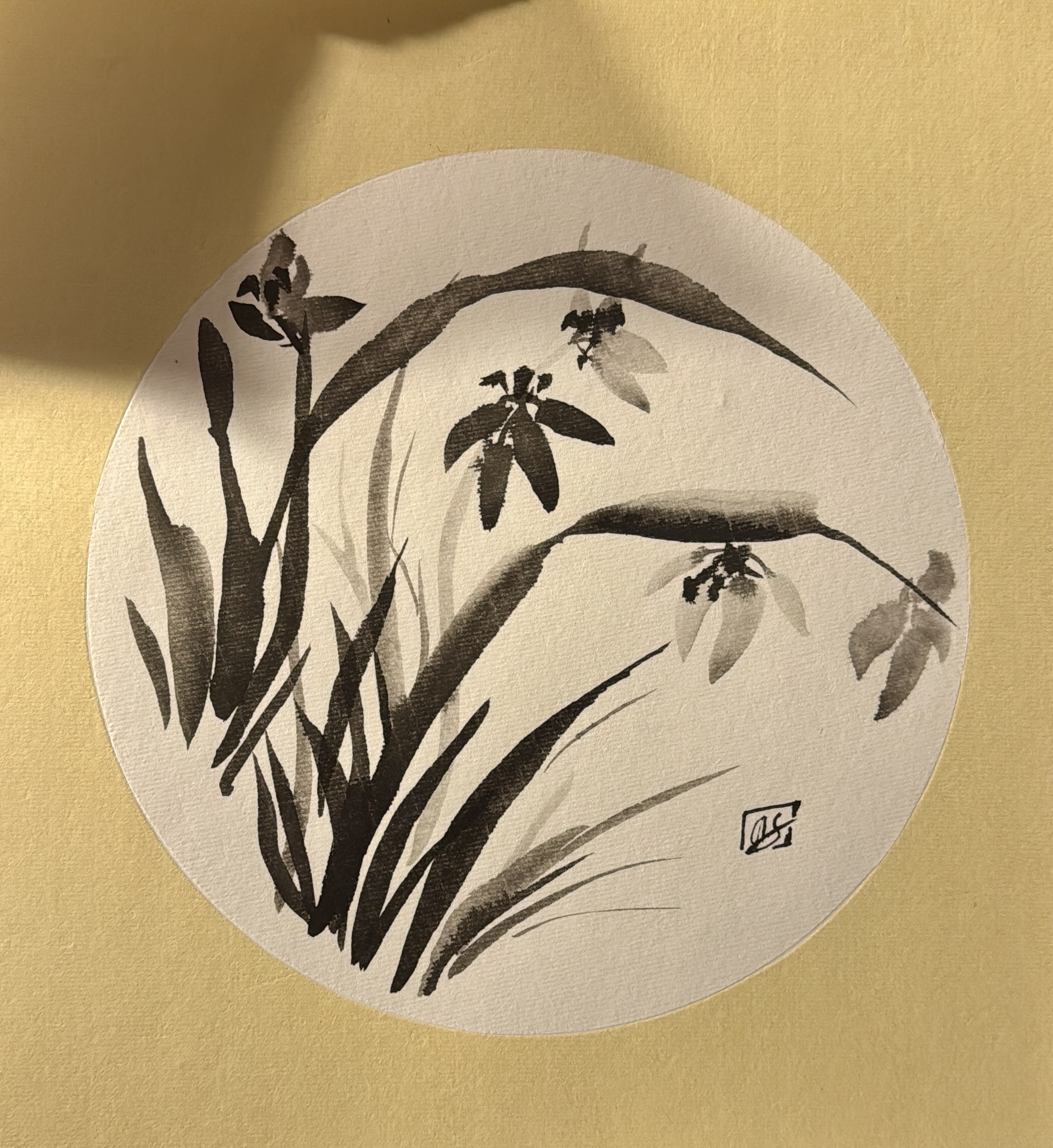

The pieces herein are available in print, postcards, and select originals upon request.
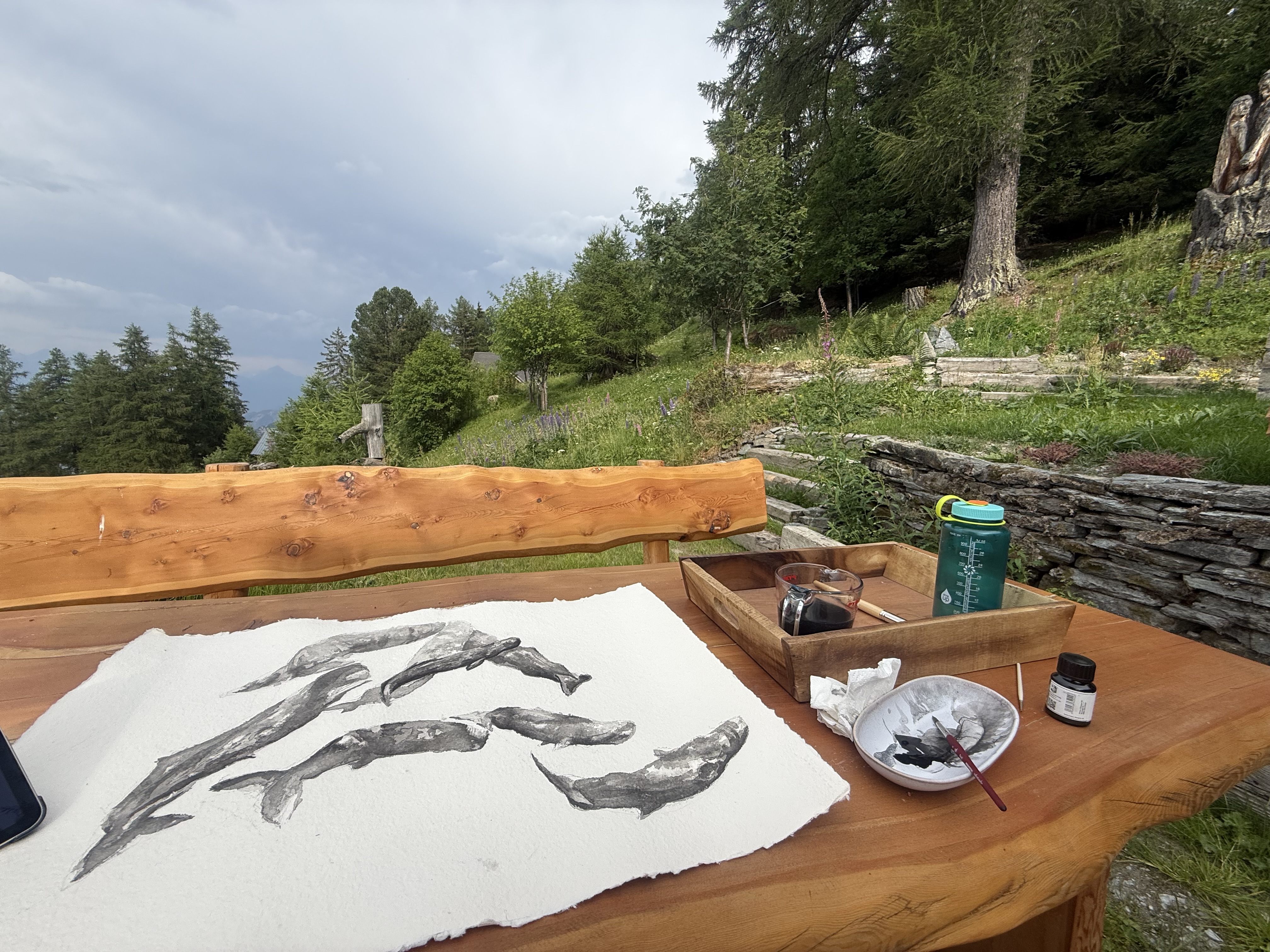
Shadow and light, and the fluidity of motion that ink can capture made me fall in love with this medium, for quick sketches as well as for final pieces. How can one capture depth, such as a pod of humpback whales in the ocean, with simply only layers of ink? How can one capture motion by letting ink find its way through water on paper? How do I learn to know when a piece is done, when the last layer of ink is enough?
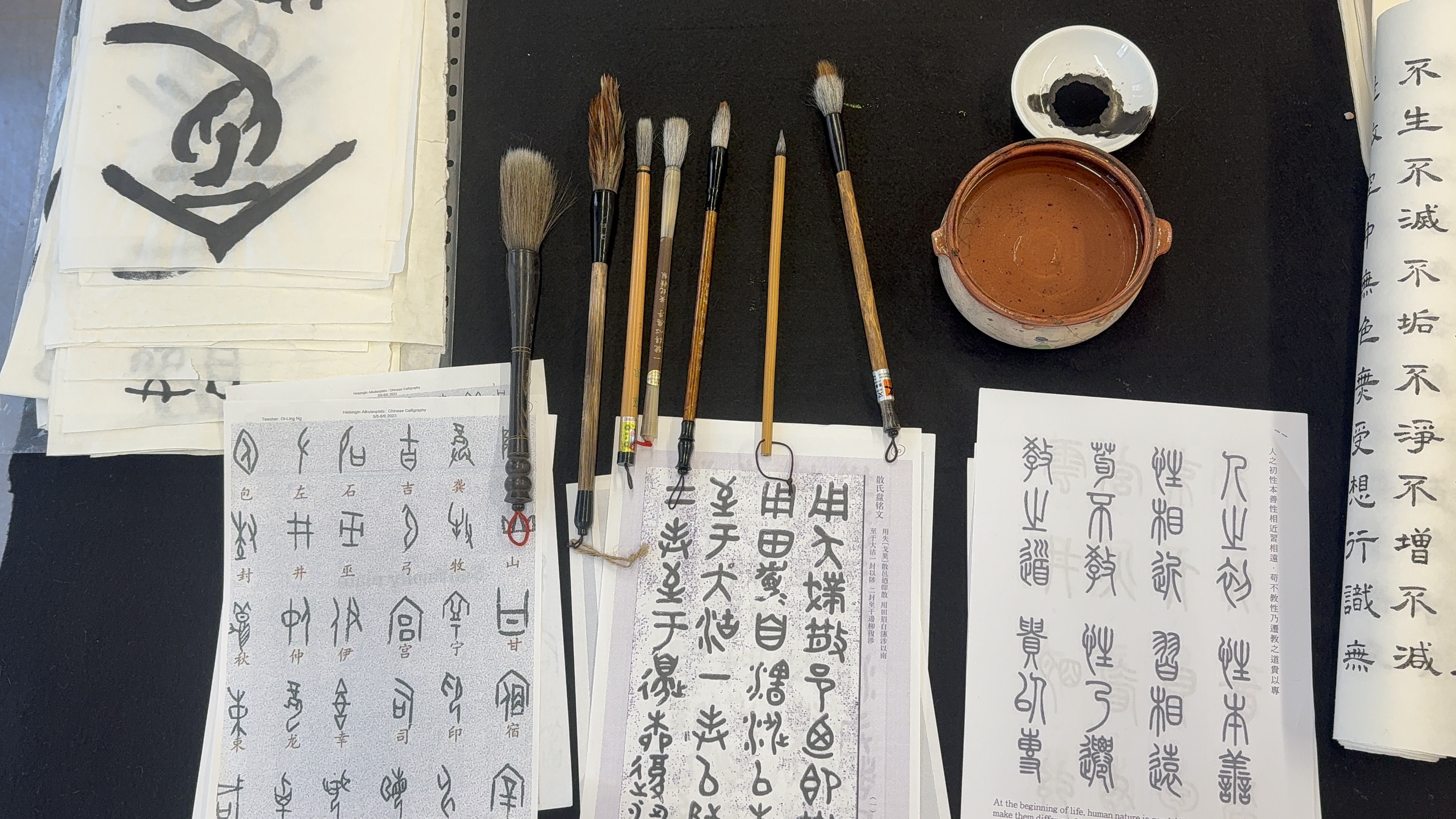
Ink loosens my hand, my thoughts and enlargens my strokes - forced to be more interpretive by the fluidity of the medium. During my time in Helsinki, Finland, I spent time learning Sumi-e painting - traditional Chinese, Taiwanese and Japanese painting on rice (Xuan, 宣纸) paper. Just as cold- or hot-pressed or differently textured watercolour paper, rice paper ranges from ripe to raw. Different to watercolour painting which uses water to disperse the paint on the paper, Sumi-e uses the ripeness and therefore the paper‘s degree of diffusion, to control the final effect. More interpretive pieces, use raw paper which produce blotches and flows of ink. The brushes used are entirely different to watercolour brushes; traditional Sumi-e brushes are made of bound animal hair. Often goat, wolf, or rabbit fixed to a bamboo handle, shaped to hold a large reservoir of ink at the belly of the brush while forming to a fine point. A single stroke can shift from a thick, saturated mark to a hair-thin line without ever lifting the brush from the paper.
Though I paint ink using Western watercolour techniques, with wash brushes and watercolour paper, the spirit of ink and meditativeness of it does not disappear.
My Sumi-e teacher in Helsinki, rolled out a scroll of hundreds of Chinese Kaishu (modern) calligraphy. Each morning, she completes a couple lines in a state of utter focus and meditation. Thich Nhat Hanh said: „Whenever I do calligraphy, I practise to see life and work as one. Beginning each session, I always prepare tea, and then I mix in some tea with the ink. Tea and Zen have gone together for many thousands of years. And, as I draw a half circle with the brush, I breathe in. As I draw the other half circle I breathe out. There is breathing in the circle; there is mindfulness.“
This is the spirit of painting in ink.
It‘s the spirit that allows me to calm, and follow the ink where it might want to go on the piece of paper rather than enforcing my preconceived visions. It allows me to practise „wu-wei“ — the Daoist term for non-doing. Doing, but without effort or force.
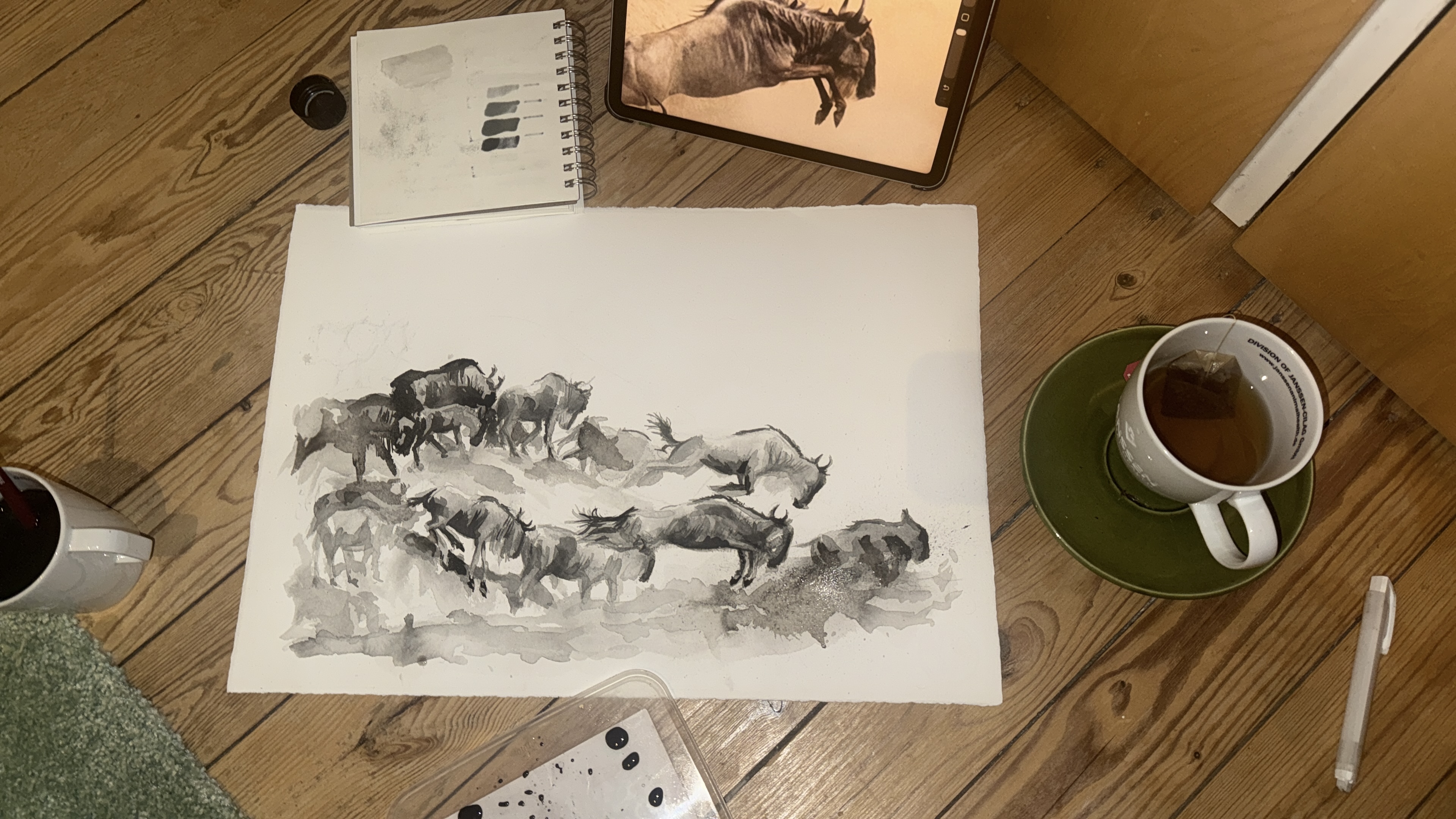
Here are some pieces of how I have used ink in my painting of wildlife thus far, exploring depth and dynamic movement.