


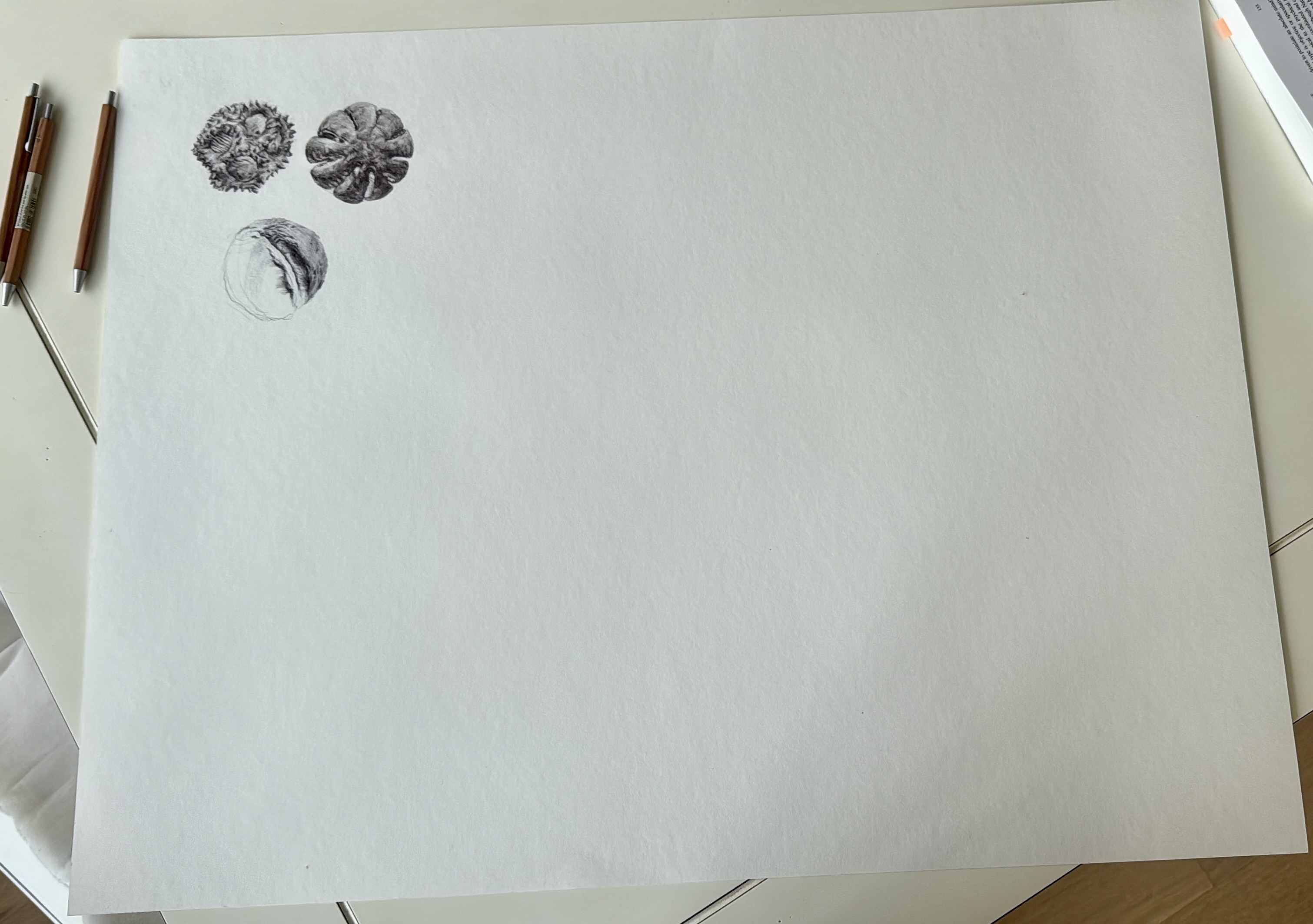

Project ongoing.
What microscopic structures are among the most resilient biological records on Earth?
Pollen.
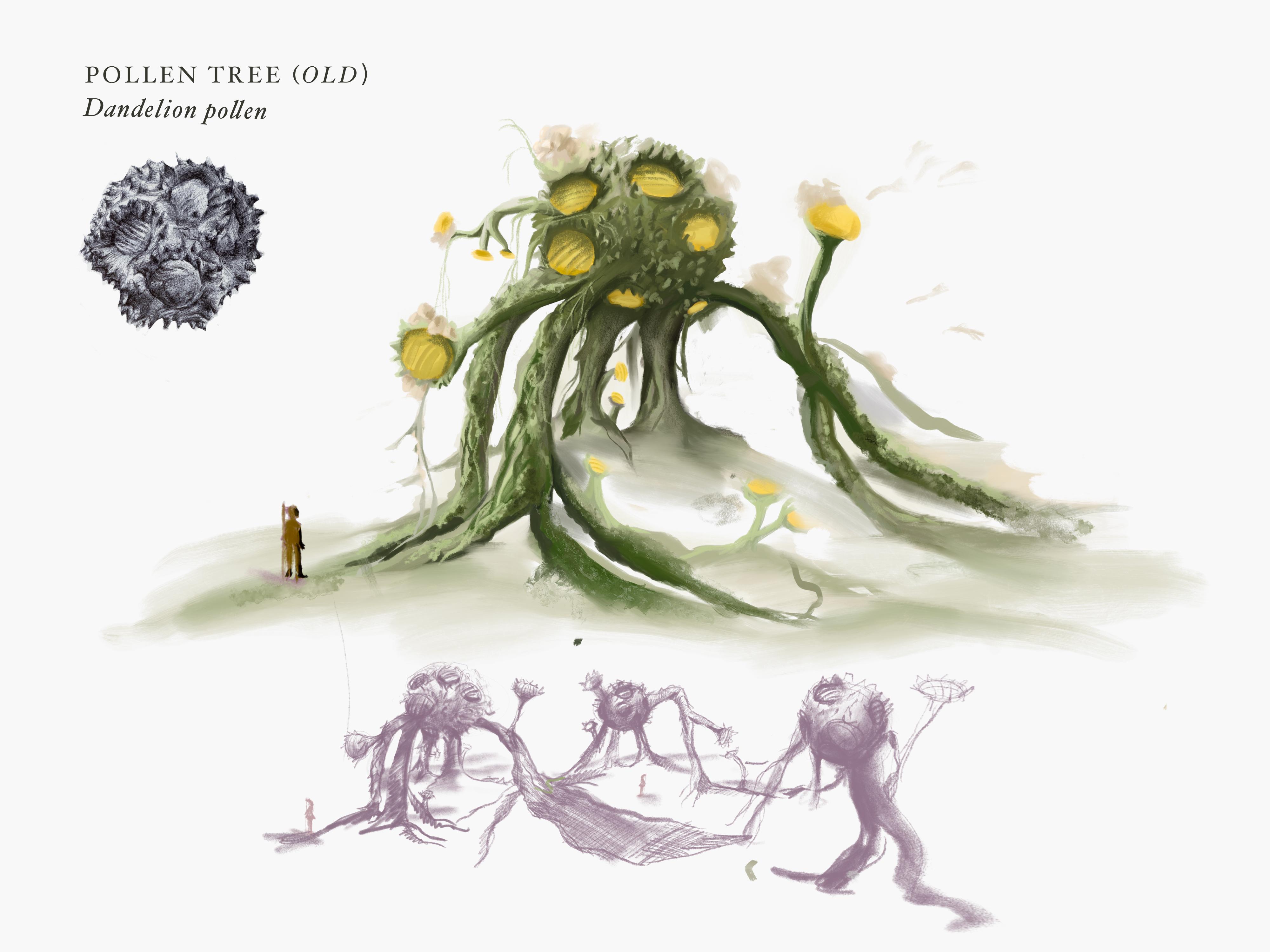
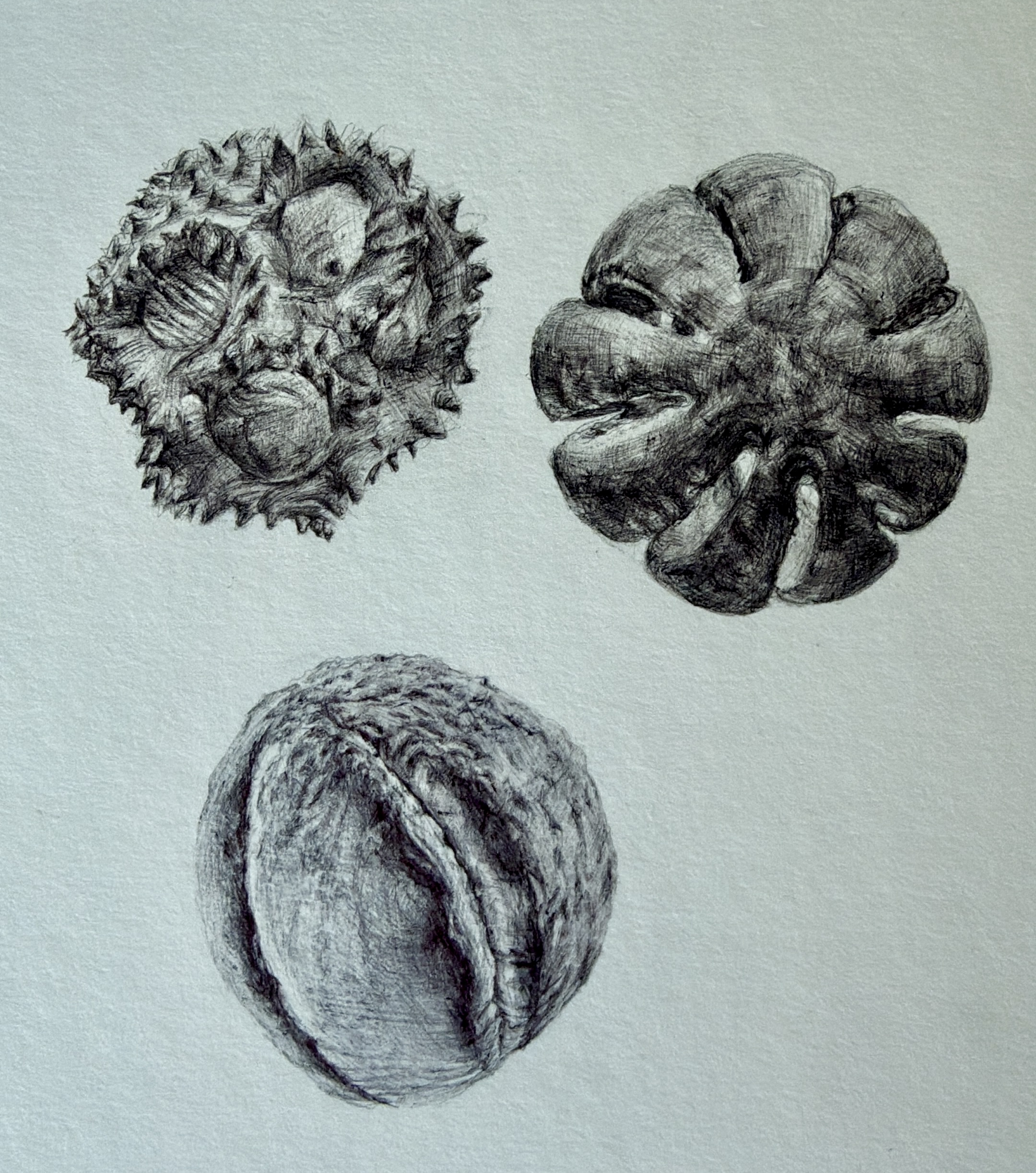
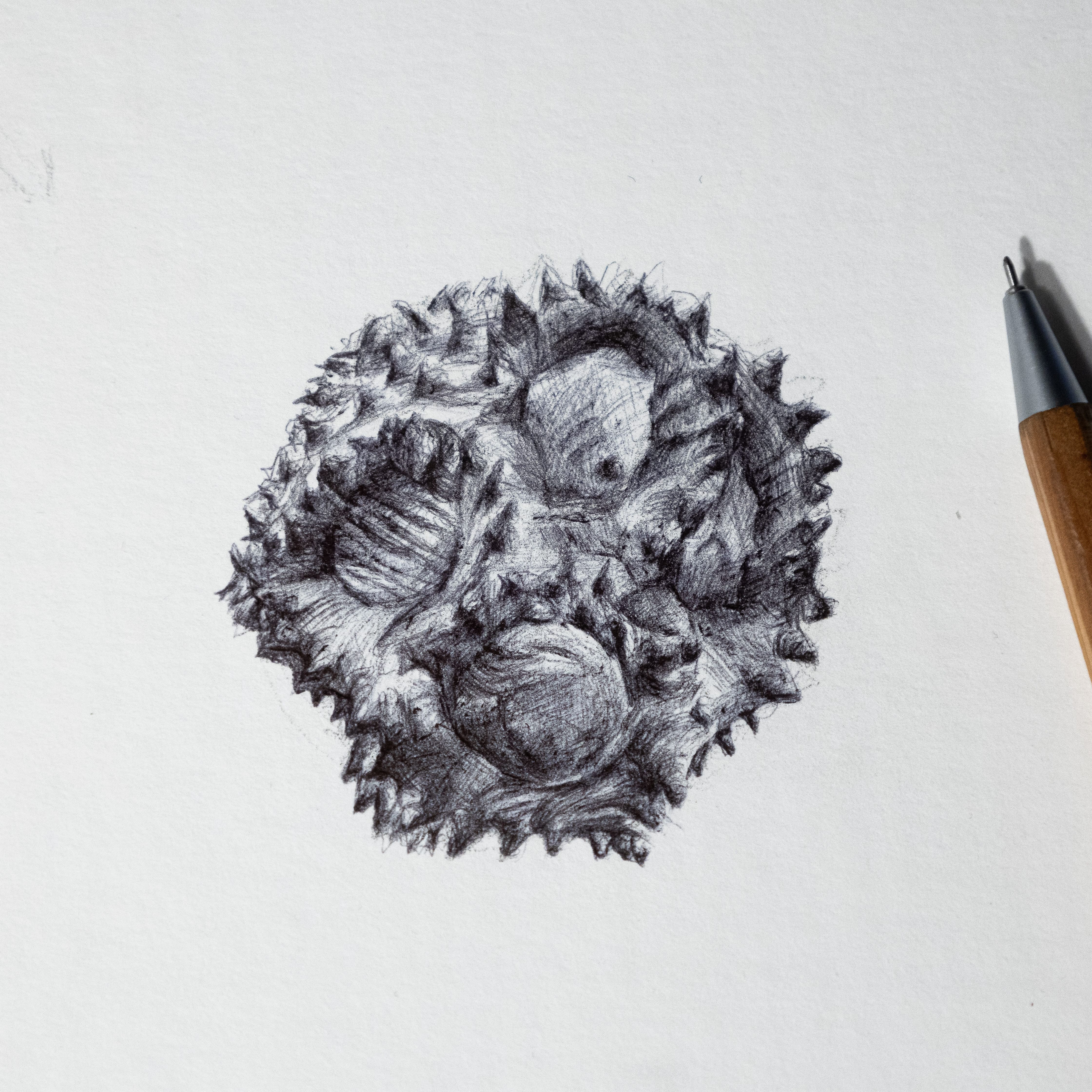
The artwork you see is the pollen of a plant whose seeds we blow to be carried on the wind, in the hopes of magic to happen: the common dandelion (taraxacum officinale). Carried by wind, water and preserved in sediments for millions of years, pollen are “mini-fossils” allowing us to reconstruct past ecosystems, climates, and even human histories. Each plant species' pollen is unique in form and pattern.
Some of the most diverse and creative expressions of Mother Earth exist at a scale we rarely care to think about. What happens if through art, we can bring them to a scale we wouldn't miss? How would our understanding, respect, relationship with Earth change? That's what I am also exploring in my pollen concept art (such as "The Dandelion Tree").
So, in honour of the creativity and diversity of our planet I am working on a composite artwork of dozens of pollen grains. Using only a 0.05 mm ballpoint pen, I am exploring their diverse structures and architecture
I’m working with references from the NIH 3D Pollen Library - the world’s largest open collection of 3D pollen and spore models.
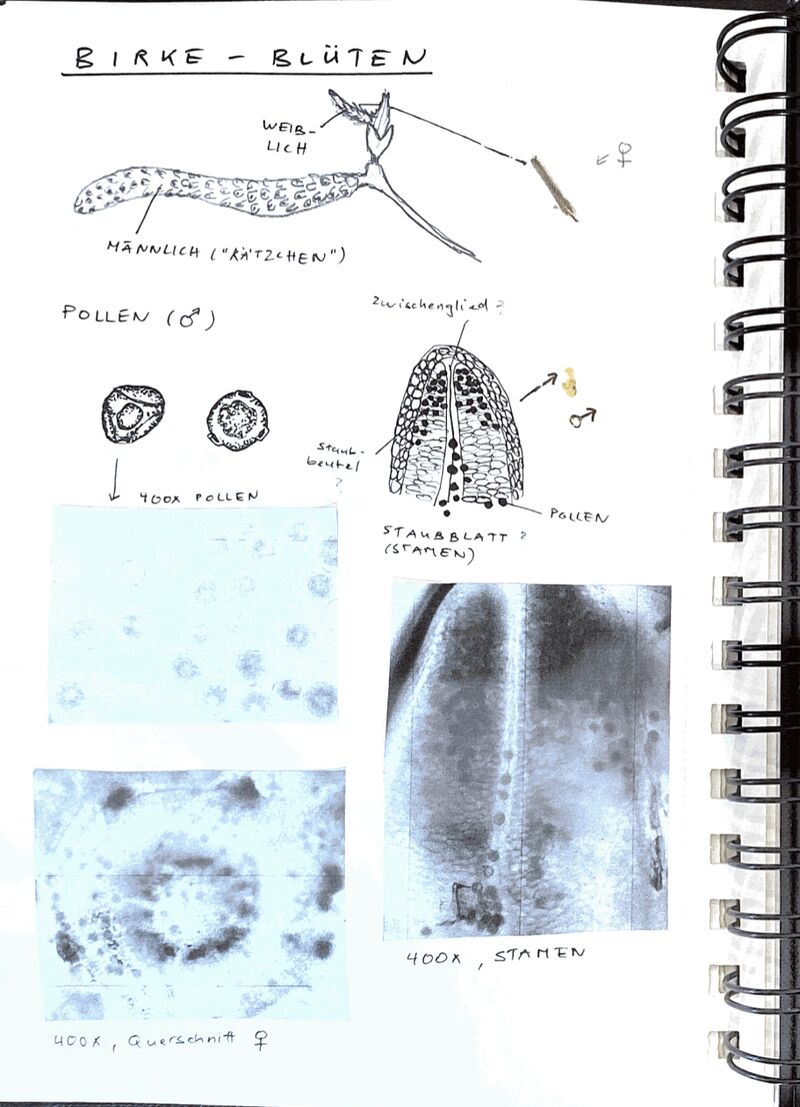
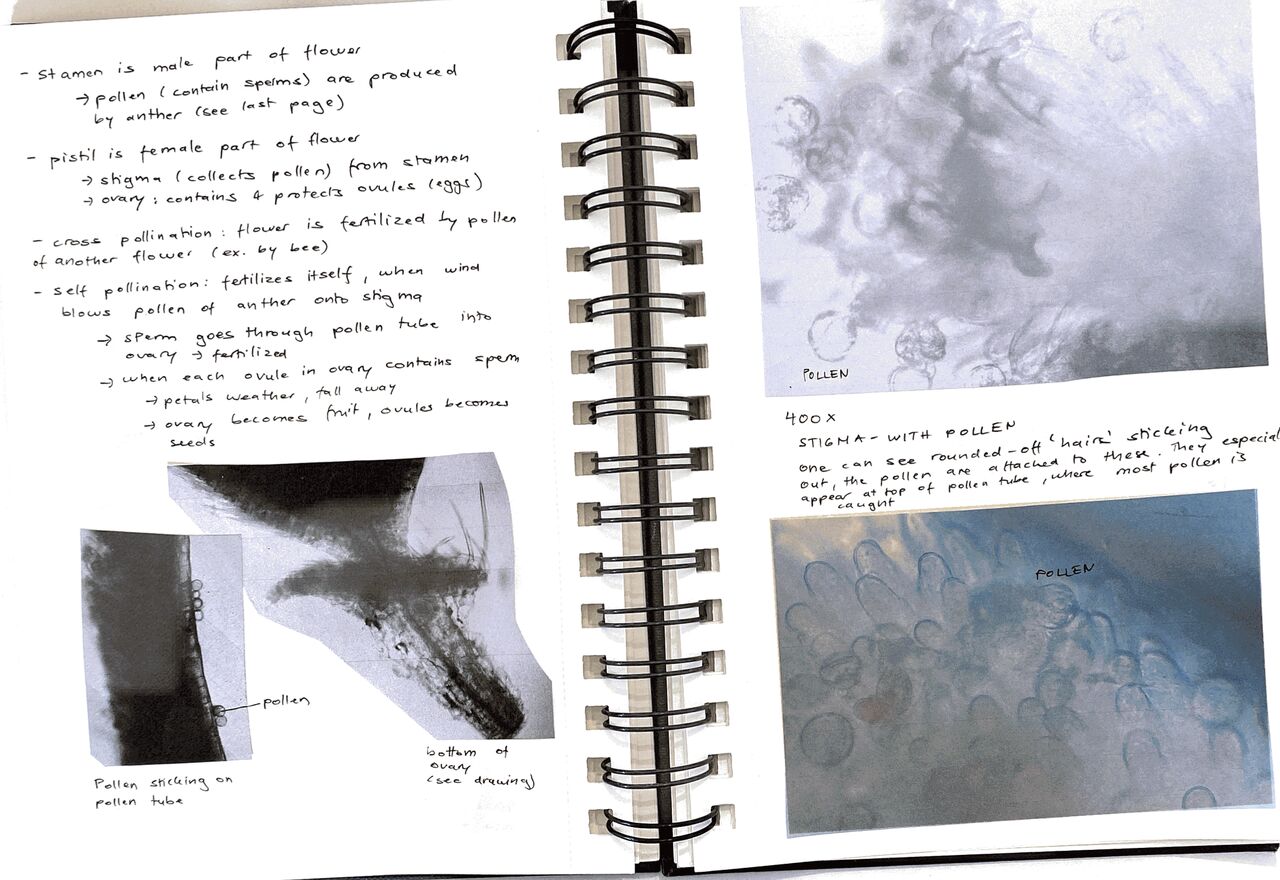
I’ve always been fascinated by natural structures and patterns- this curiosity started when I was 17, seeing pollen under my microscope for the first time and where I spent our sketching what I was able to see of them through my light microscope.