

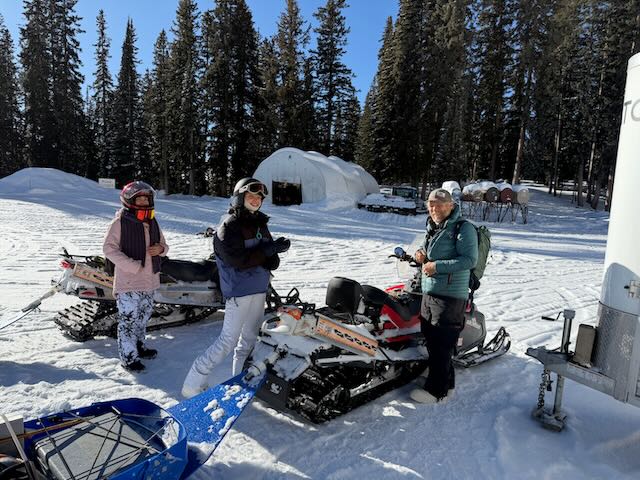
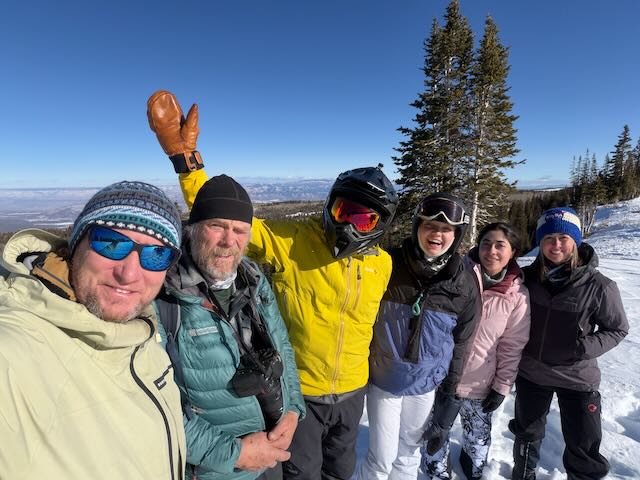
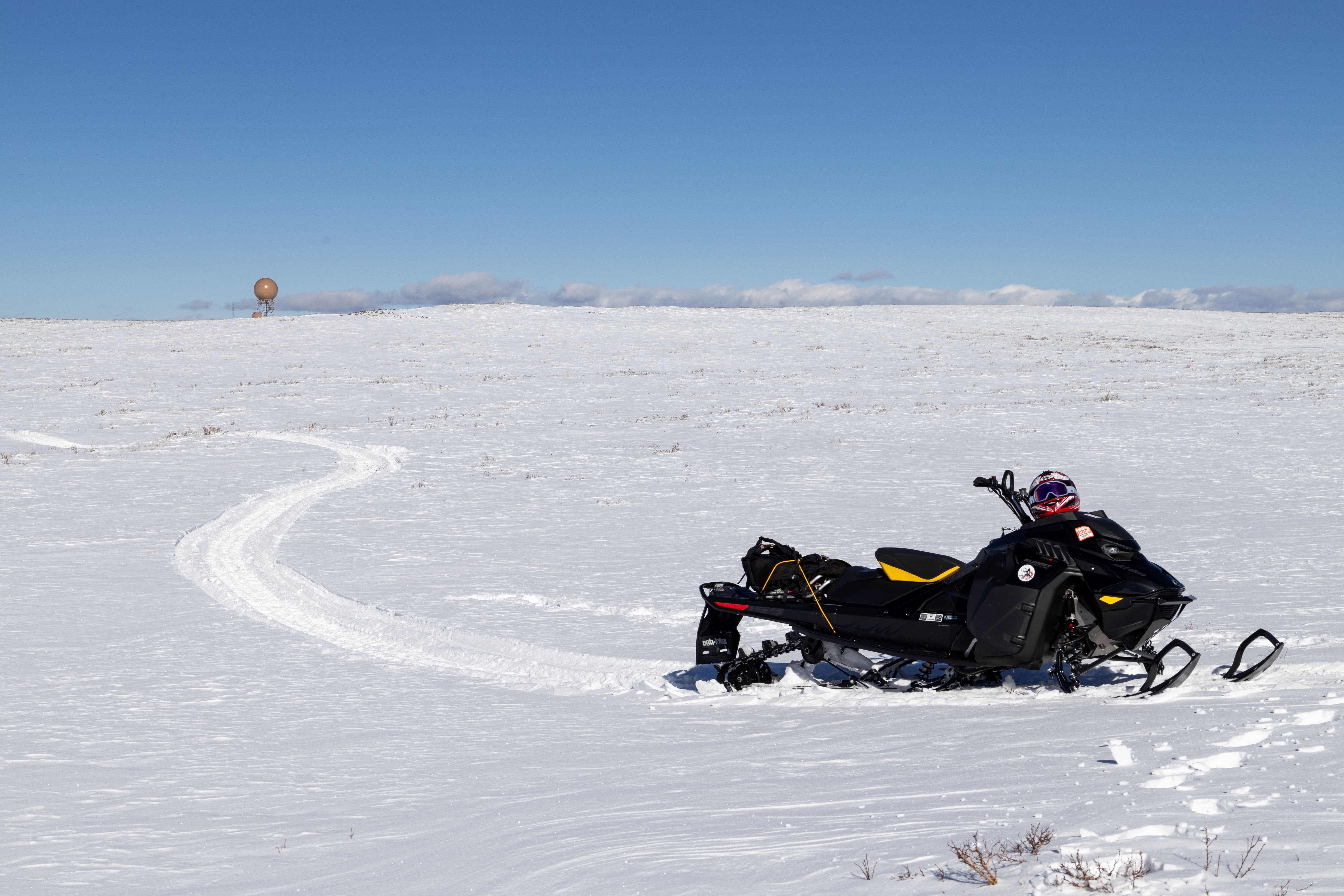

In February 2026, I took part in a NASA-funded mission testing a snow satellite (SNOWWI). SNOWWI is an airborne radar instrument developed by the University of Massachusetts Amherst, working toward a future satellite mission. This was my first multi-day field work as part of a larger campaign. I was part of the on-the-ground team taking measurements, zooming across snow-covered plains on snowmobiles while the airplane carrying SNOWWI flew overhead. It took place on Grand Mesa (literally, "Big Table"), the USA's largest flat-topped mountain.
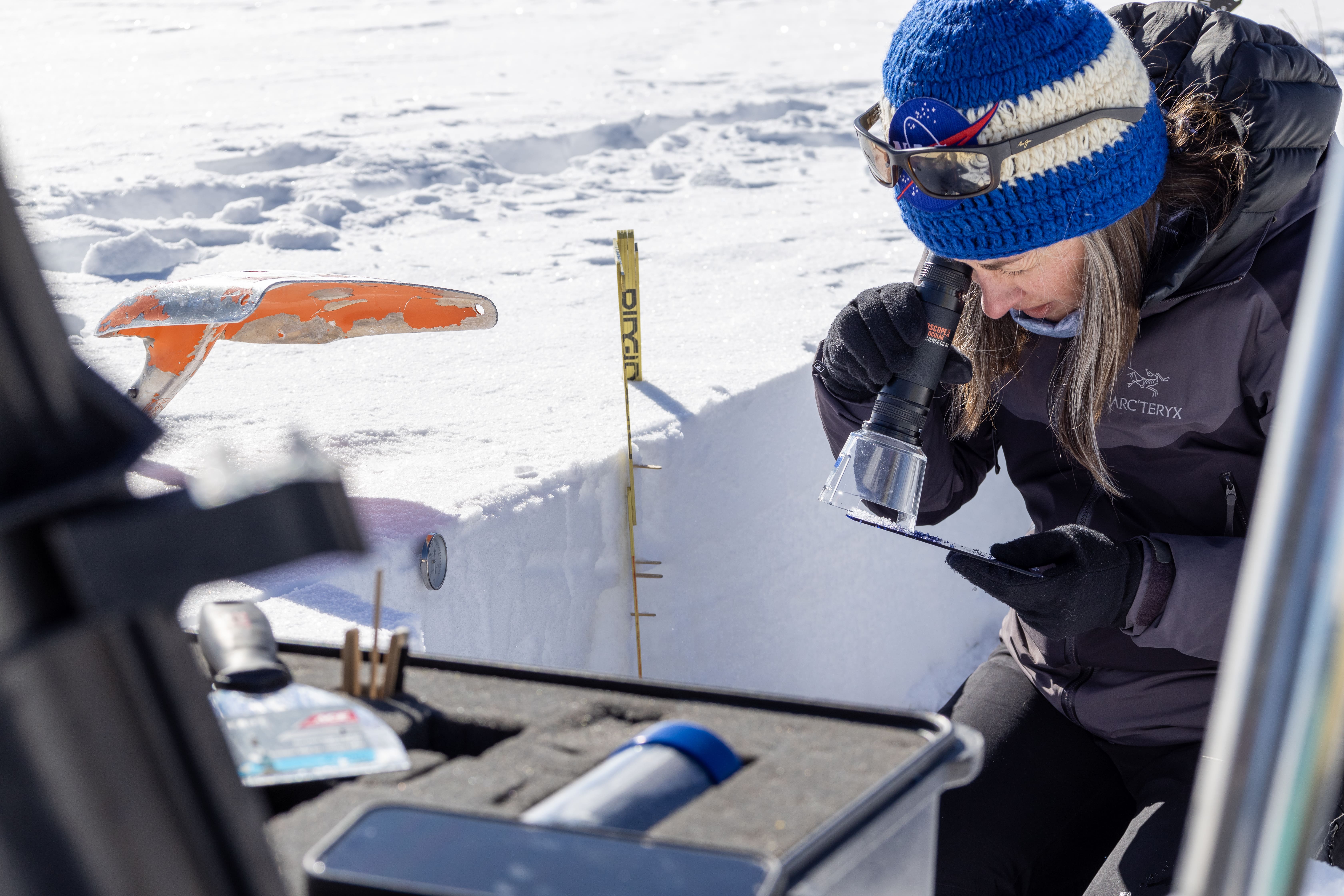
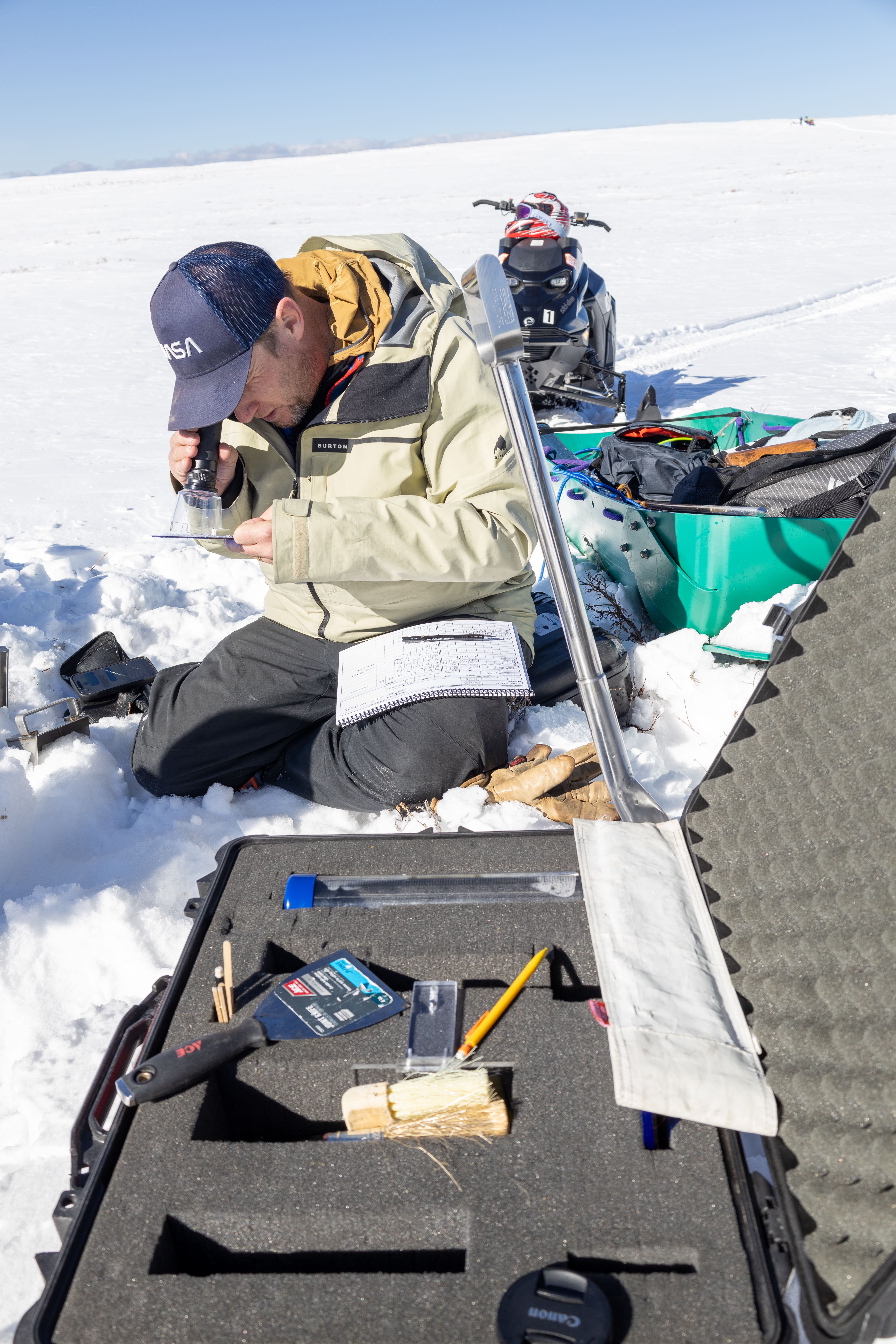
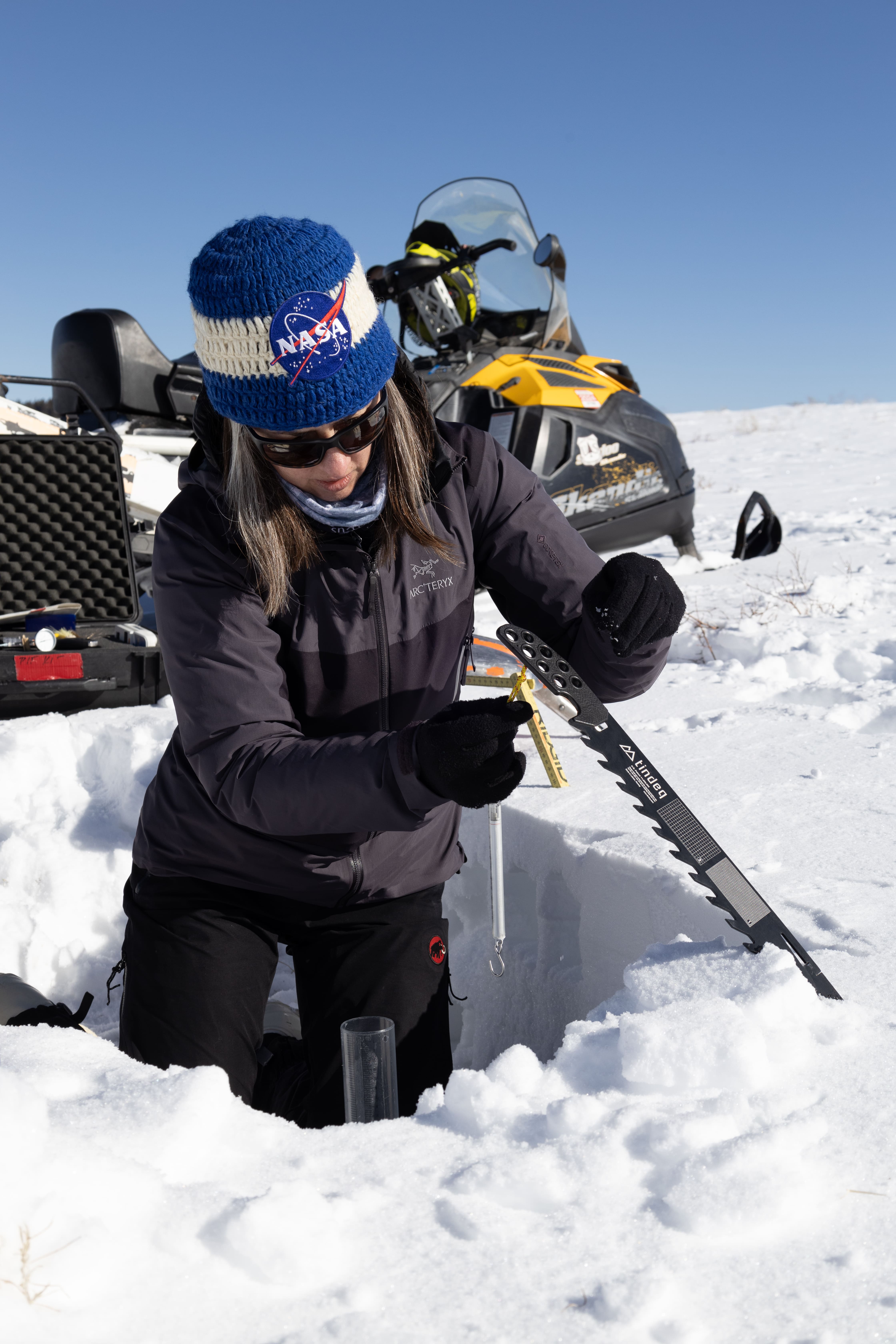
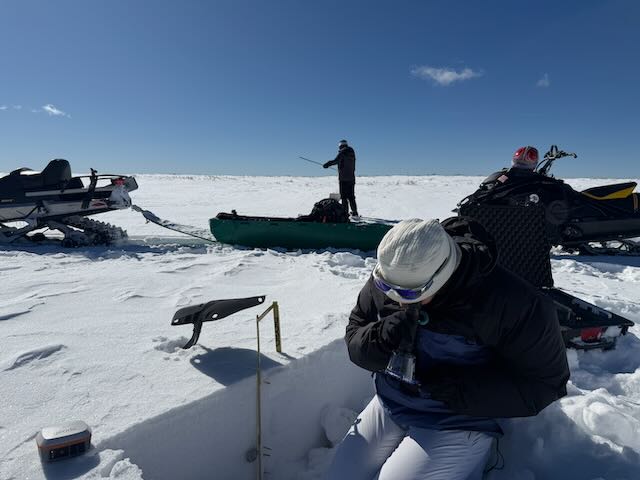
Over three days, we drove out to Grand Mesa on snowmobiles to different sites to measure snow properties: those include snow depth, strength, density, snow grain / crystal type (using the magnifying loupe and crystal card in the photos), and layering of the snow. These measurements are then compared to the measurements taken by the instrument flown overhead. This comparison matters because satellites can only detect radar, microwave, or optical signals reflecting off the snow's surface. Properties like density, hardness, layering, and how much liquid water is trapped inside the snowpack can't be sensed directly from orbit. They have to be calculated through computer models. Our snow measurements provide the "ground truth" necessary to test whether those models are returning correct data, and with what error.
The algorithms behind the future satellite mission are calibrated and refined using data collected on field campaigns such as this one, until the technology is accurate enough for a final launch and deployment.
We leave the cabins early, bundled in layers of down jackets and parkas. I am wearing "bunny boots" - supposedly the warmest boots out there, with multiple layers of insulation and the looks of Mickey Mouse's feet. My feet still froze. Breakfast is standard American, to say the least: eggs (or powdered eggs?), white bread, watery oats, and bright-pink "raspberry" jam. Packed lunch is peanut butter and jelly toast. I can't complain: my breakfast out in a tent wouldn't be any better, and the luxury of having slept in a heated cabin is enough.
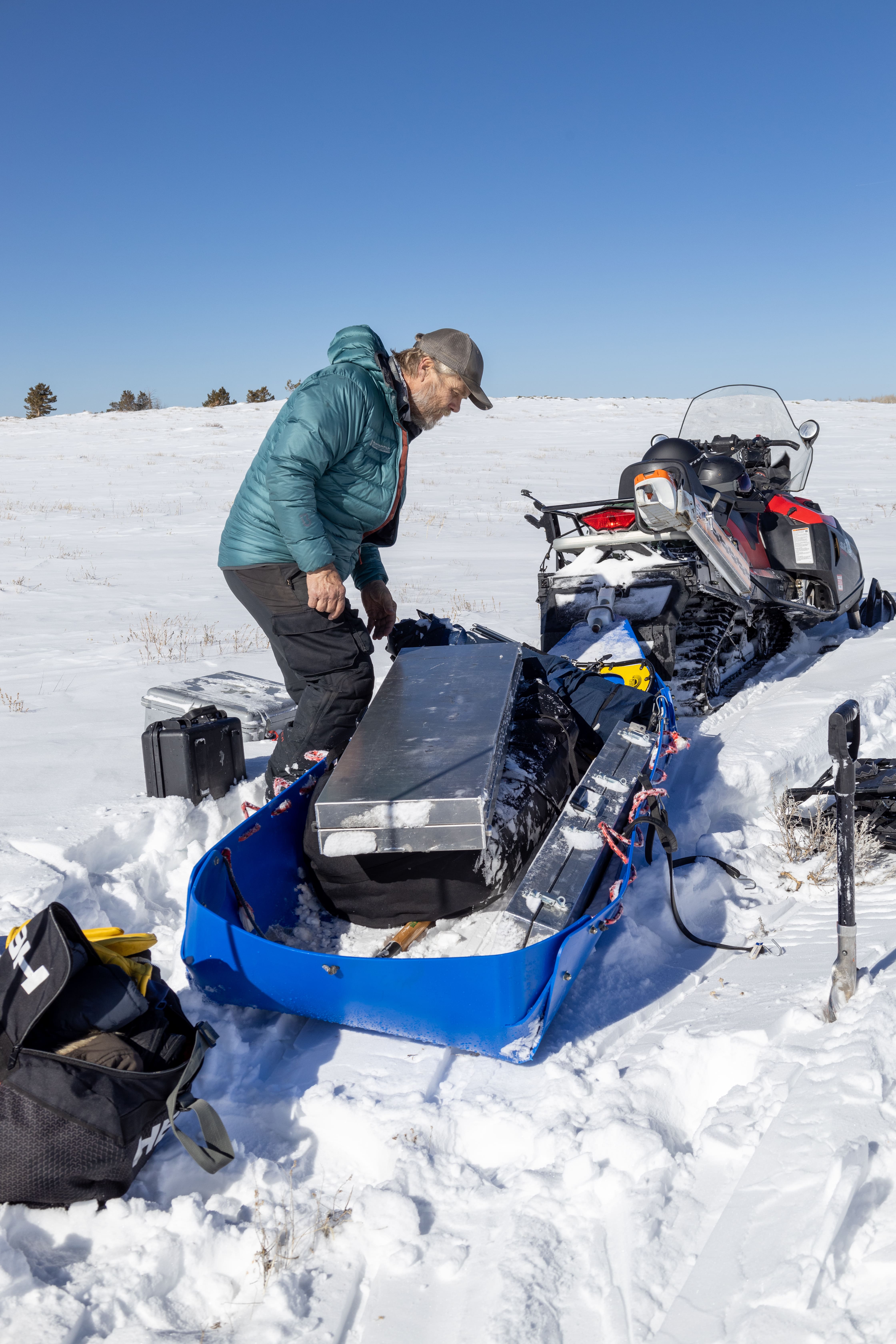
The snowmobiles are heating up outside, gear arranged like jigsaw pieces and strapped tightly with bungee cords into the sleds attached to the machines. They will pull all our gear (and lose some of it, multiple times). Winter 2026 was a very bad snow year in Colorado: some ground was more asphalt and stones than it was covered snow.
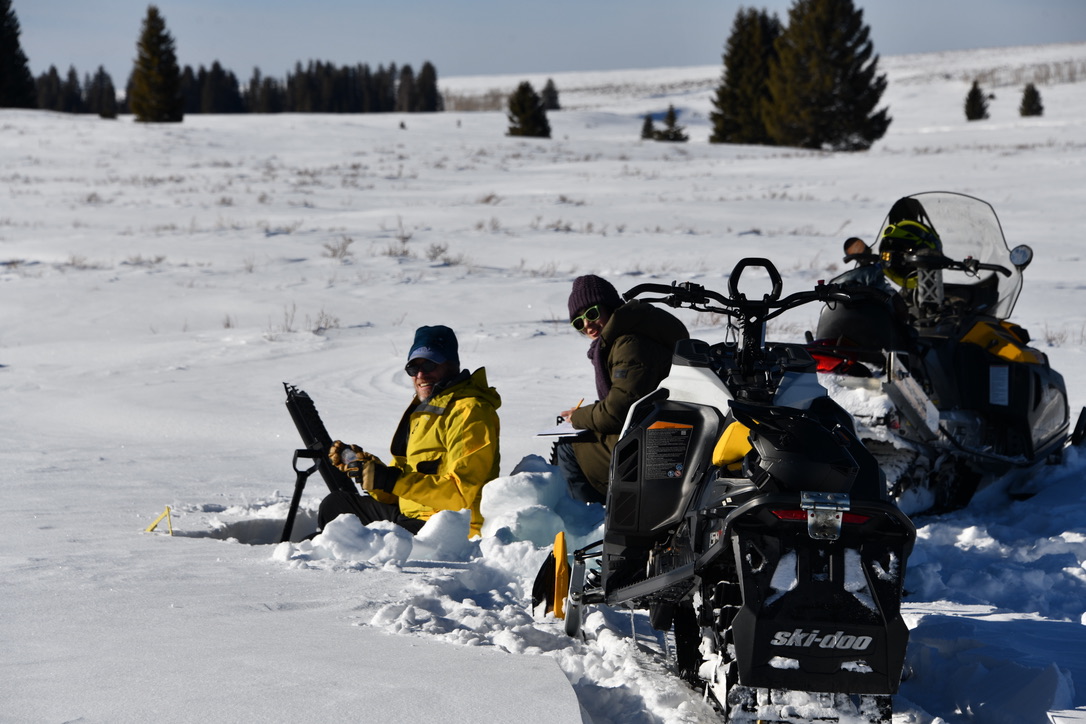
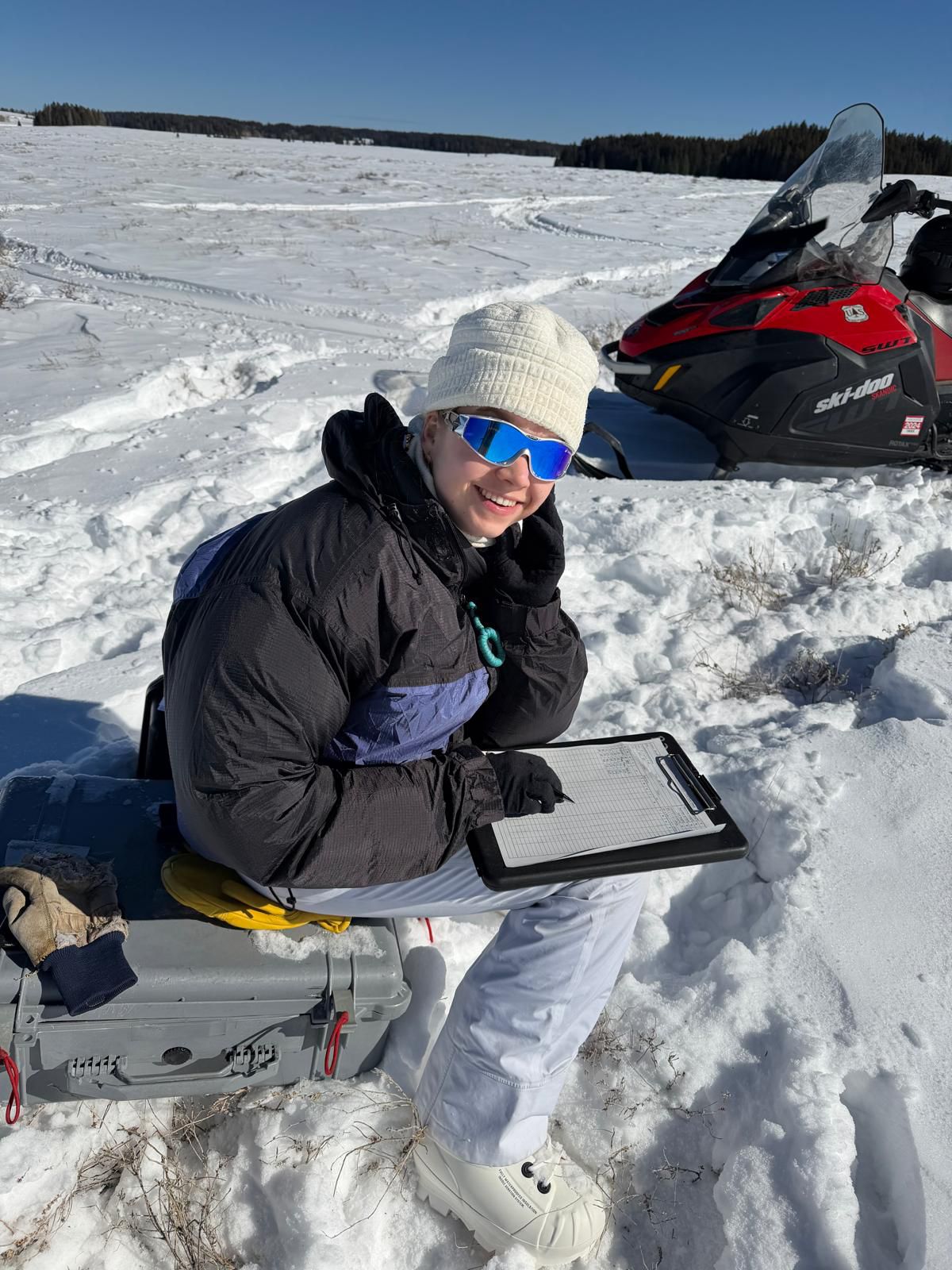
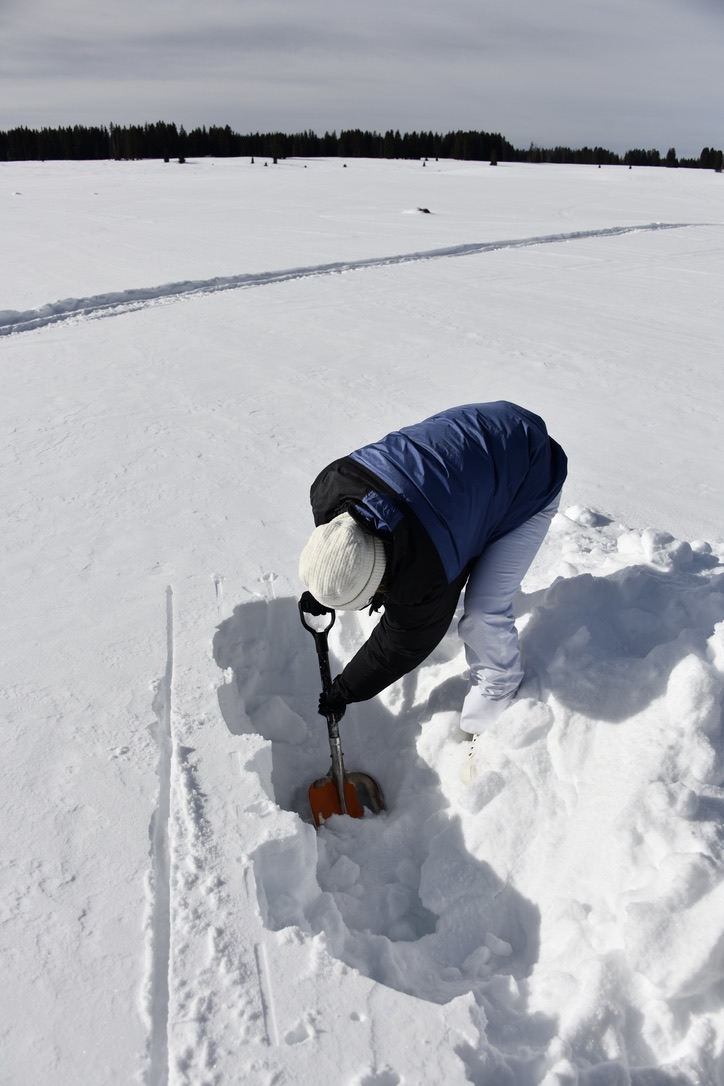
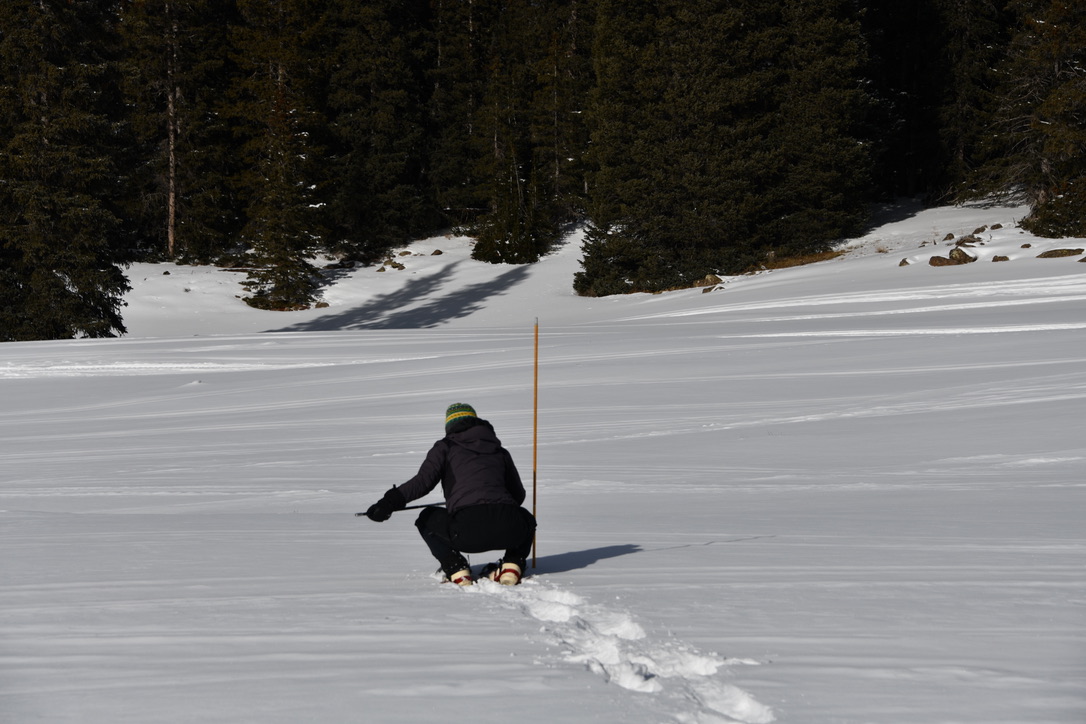
Out on the snowmobile tracks, we head to the first field site. The routine is the same for all sites: off-load the instruments, someone starts digging the snow pit, another straps on snowshoes and sets out for snow depth transects, someone wrestles out the data sheet to take notes. Once done, we pack up, hop on snowmobiles, and head to the next site.
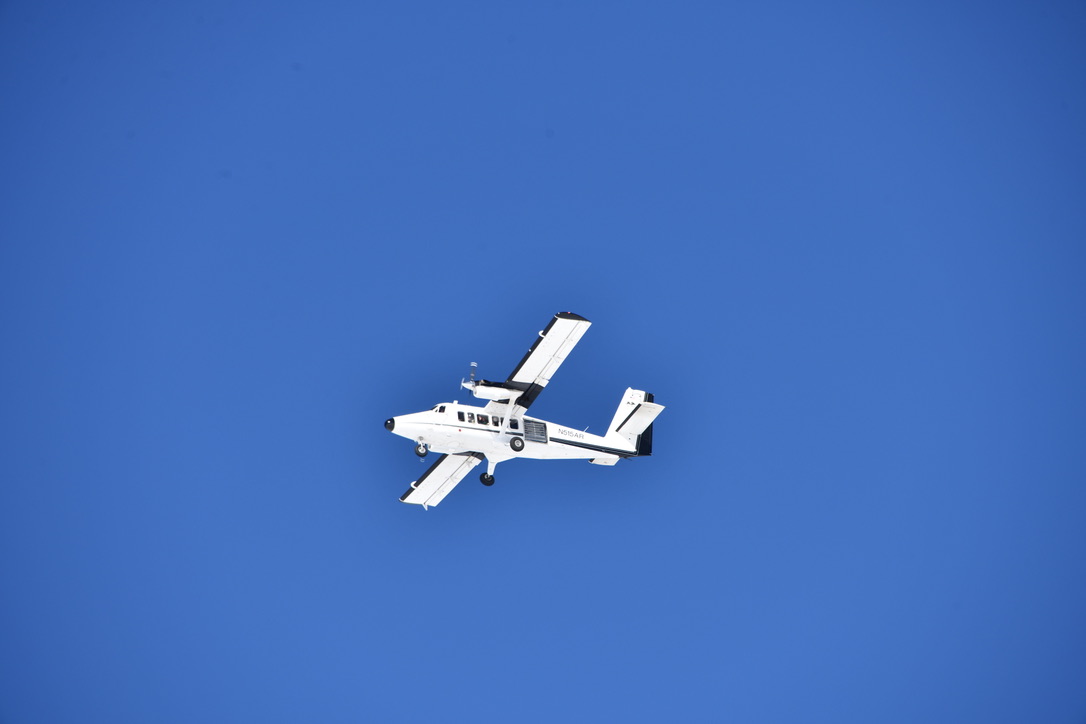
At one point, the plane carrying SNOWWI flies low over our heads. A subtle "hello" from the airborne team.


