




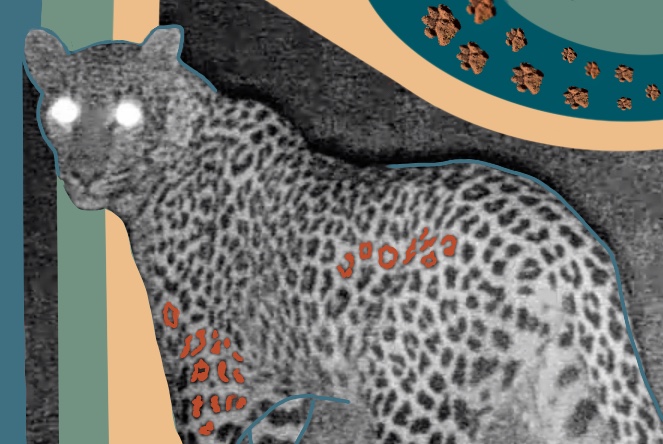

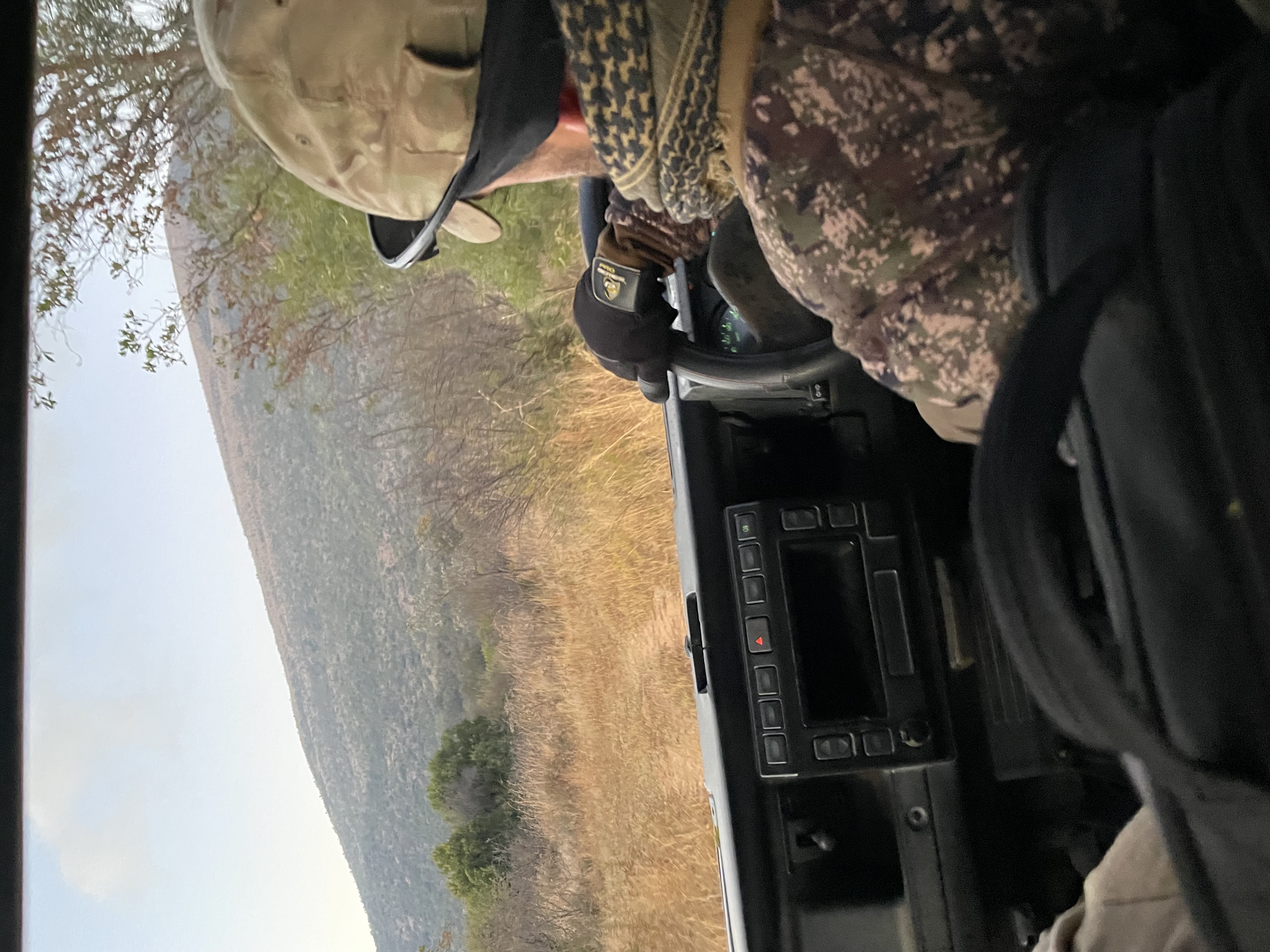
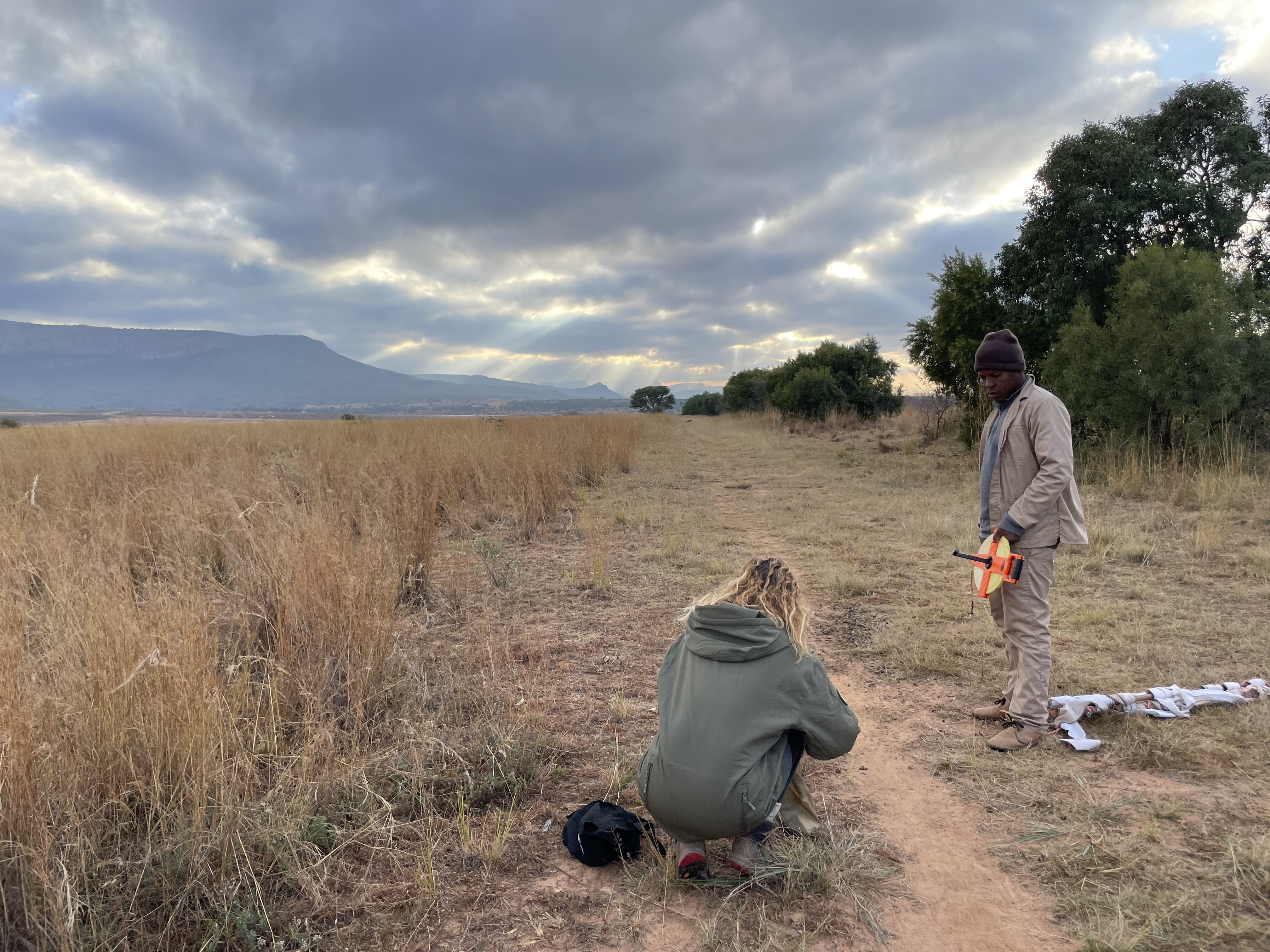
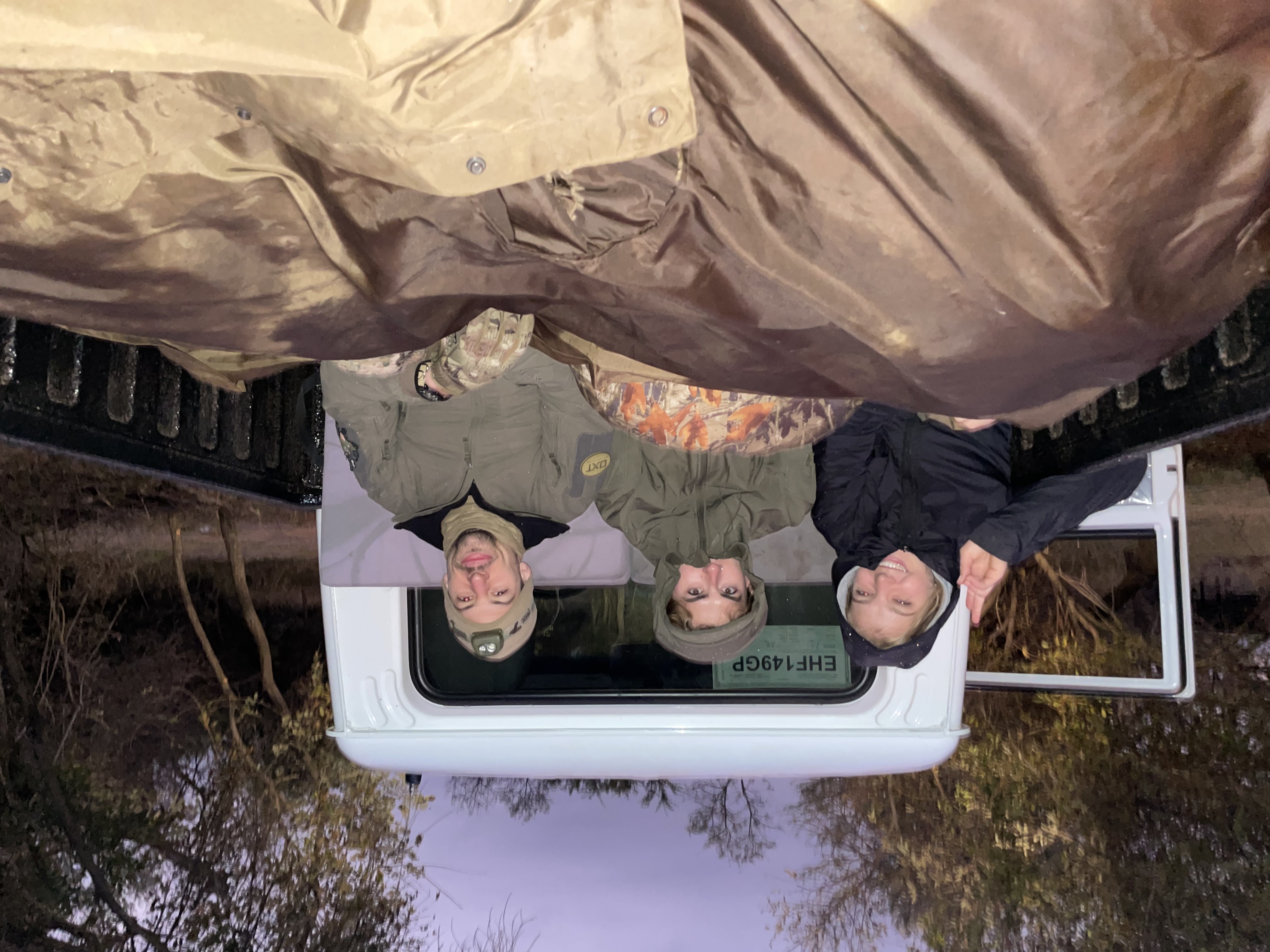

In June 2022, I spent time on a reserve in the Limpopo region of South Africa, studying African leopards (Panthera pardus pardus) for the AMES Foundation. The reserve I was doing research on, was surrounded by crop farms, that would not hesitate to kill a leopard. By compiling a portfolio of evidence for each leopard on the reserve, we would be able to apply for GPS collaring the leopards. I spent a month tracking leopards, measuring 50+ spoor, taking plaster prints, camera trapping, and baiting to compile a comprehensive report of the leopards' locations, sex and number of leopard individuals on the reserve.
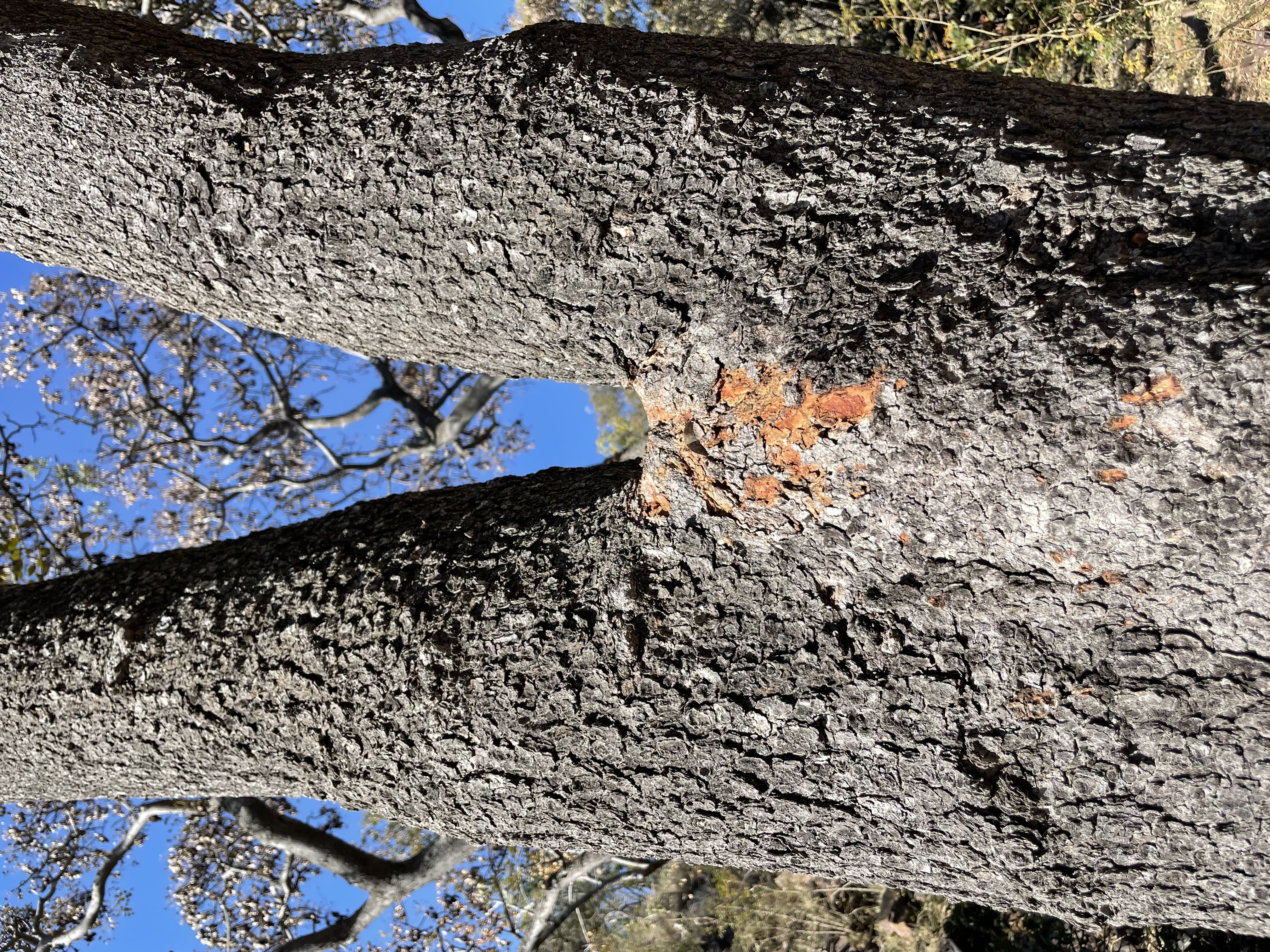
You know, the bush tells you stories when you look closely. Everything tells a story when you take the time to look closer. You'll hear it whisper in your ears when you notice the broken branch and the chipped bark. You'll watch the bush write a story for you when you look at the dirt wallow, the nearby smoothed-out tree bark. It all makes sense when you piece it together. Like a good story, nothing in nature works in isolation. But together, it is so perfect, and that's the power of it.
A leopard is a good story. A leopard does not want to be seen. And so I learned how to read their signs. I learned to look, and to wait.
The one thing we will never be able to take from nature is its own time. In the rainforest, a strangler fig strangles other trees - slowly, over decades. We don't see that strangling happen because the spectrum we perceive time on is too limited, just like the minuscule slice of the electromagnetic spectrum visible to us as light. In our laughably limited understanding of time, light, smell, and sound, we think we triumph over all other species and natural processes. Even a hyena would cackle at that arrogance.
Learning nature's time and senses is like immersing yourself in a new culture that you have to morph into, like molded clay. You need to start functioning by its unspoken rules, and let your mind work on its time, in its language.
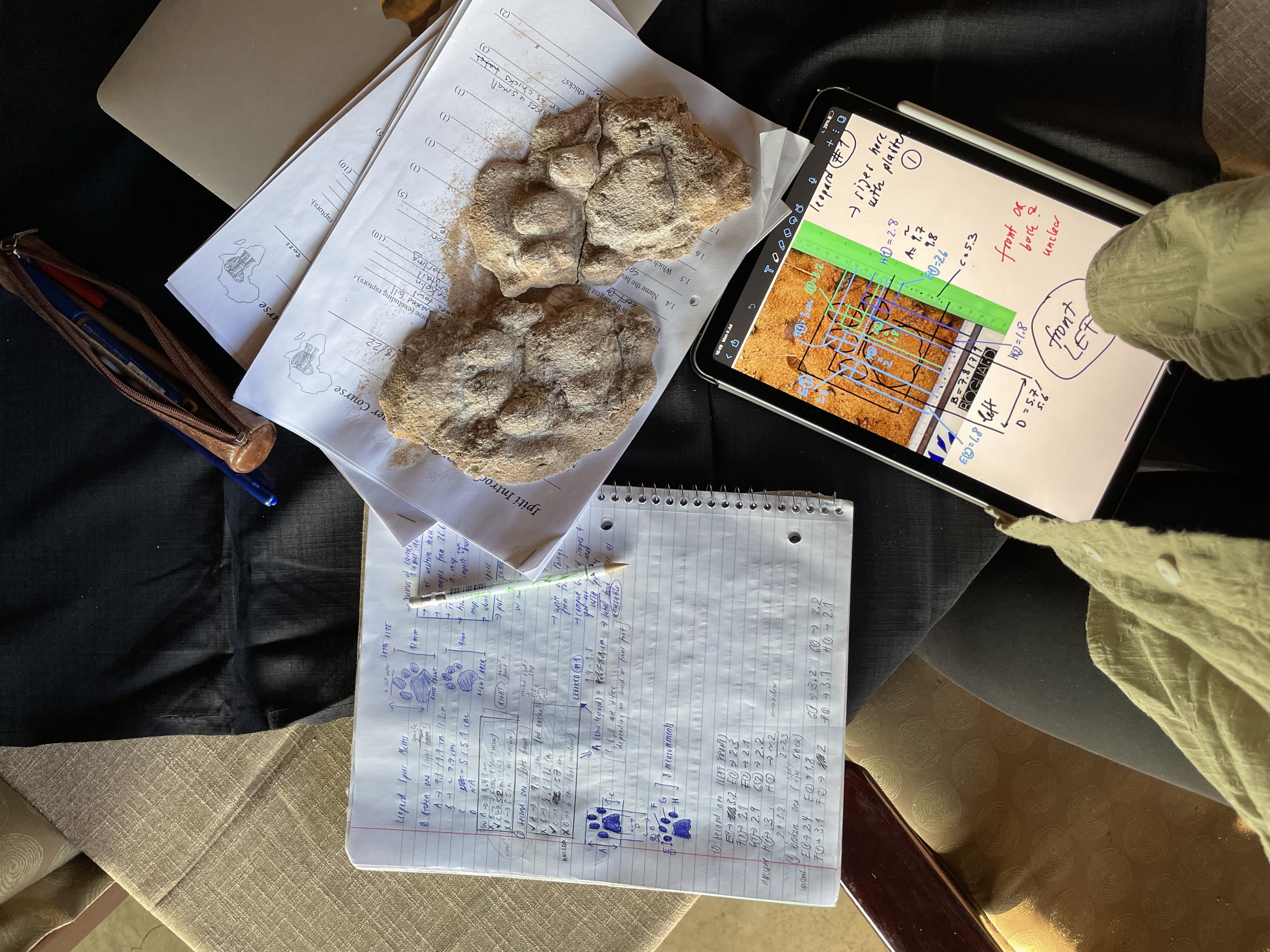
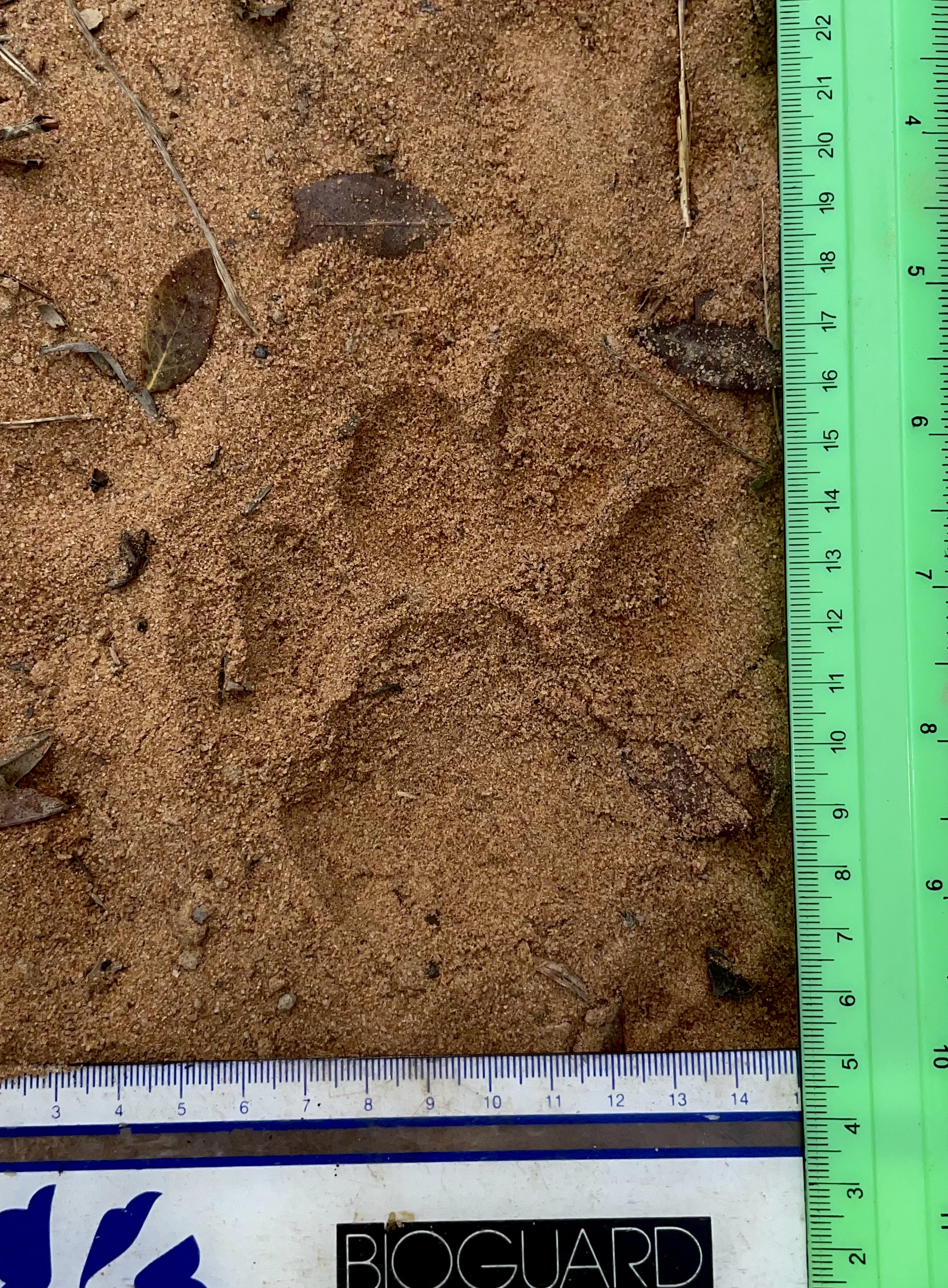
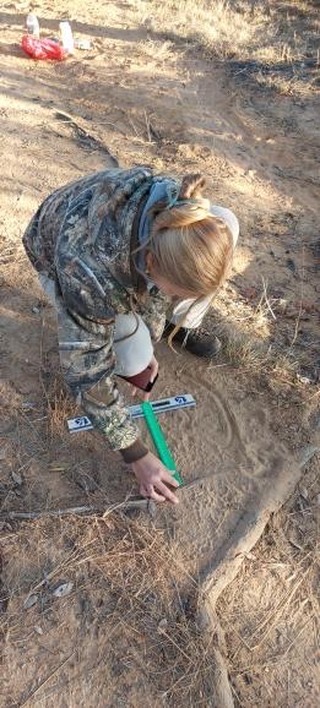
In our time spectrum, tracking a leopard is a relatively slow process. When a leopard was captured on camera overnight, we would go out to check for spoor. I measured and labeled each one with twelve measurements per spoor. Imagine the leopard knew how much attention it was getting, I thought.
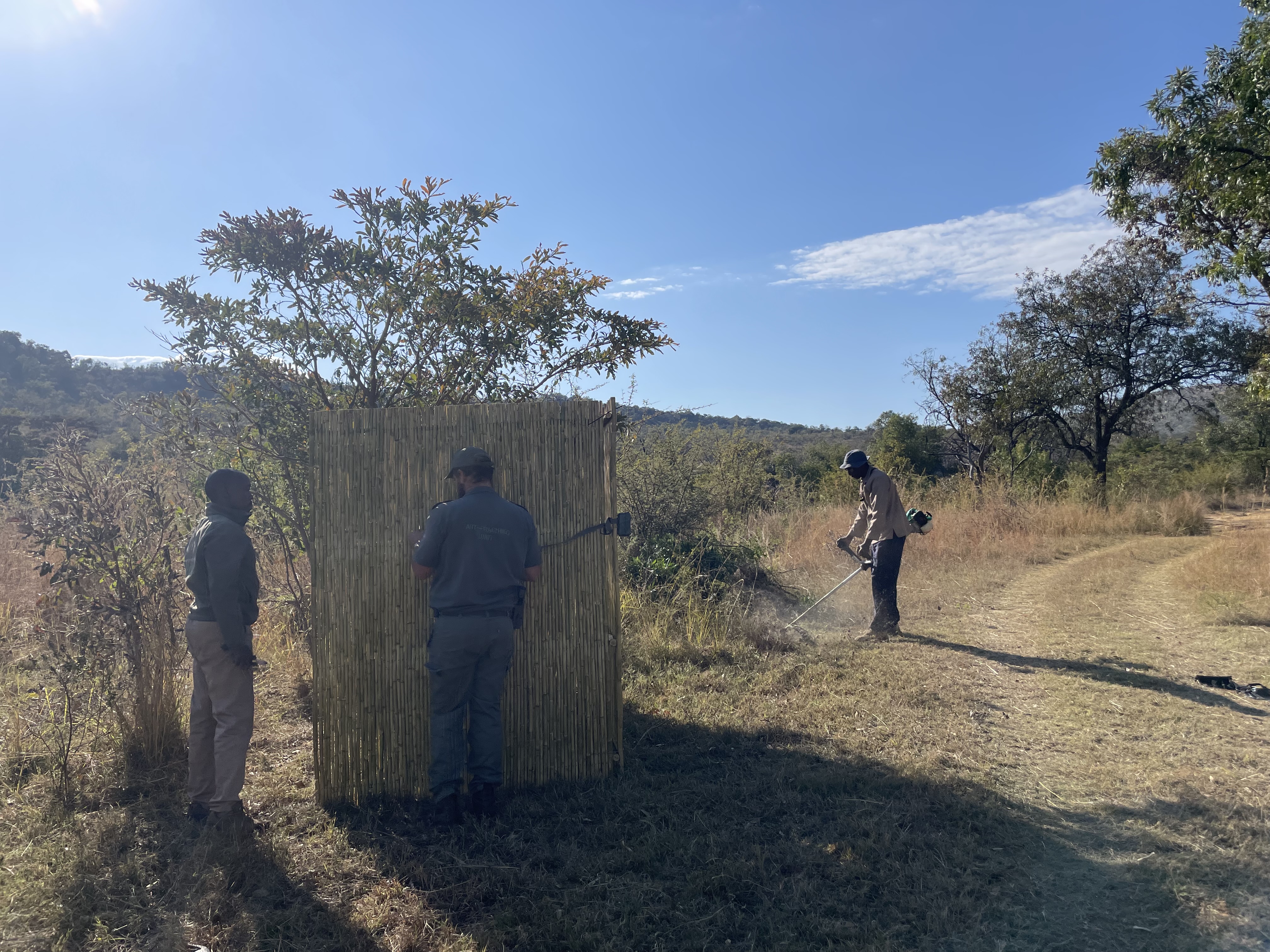
With a ranger, I would follow leopard tracks, tracing its path until the softness, or overgrown-ness, of the ground gave in. Over the month, we set up ten infrared camera traps, documented over fifty spoor, followed tracks up into the mountains, built a hide-out to watch out for leopards from, and hung leopard bait.
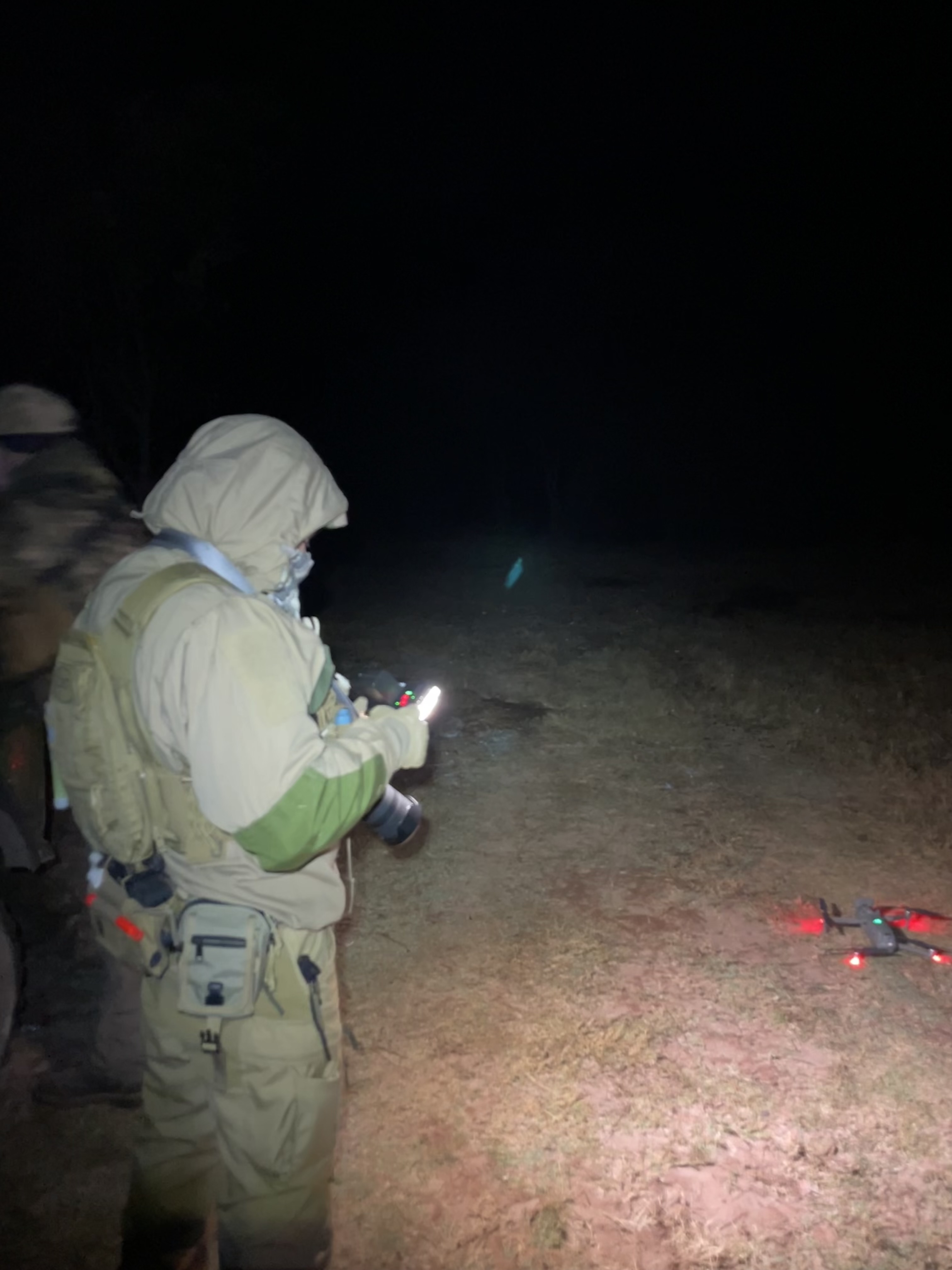
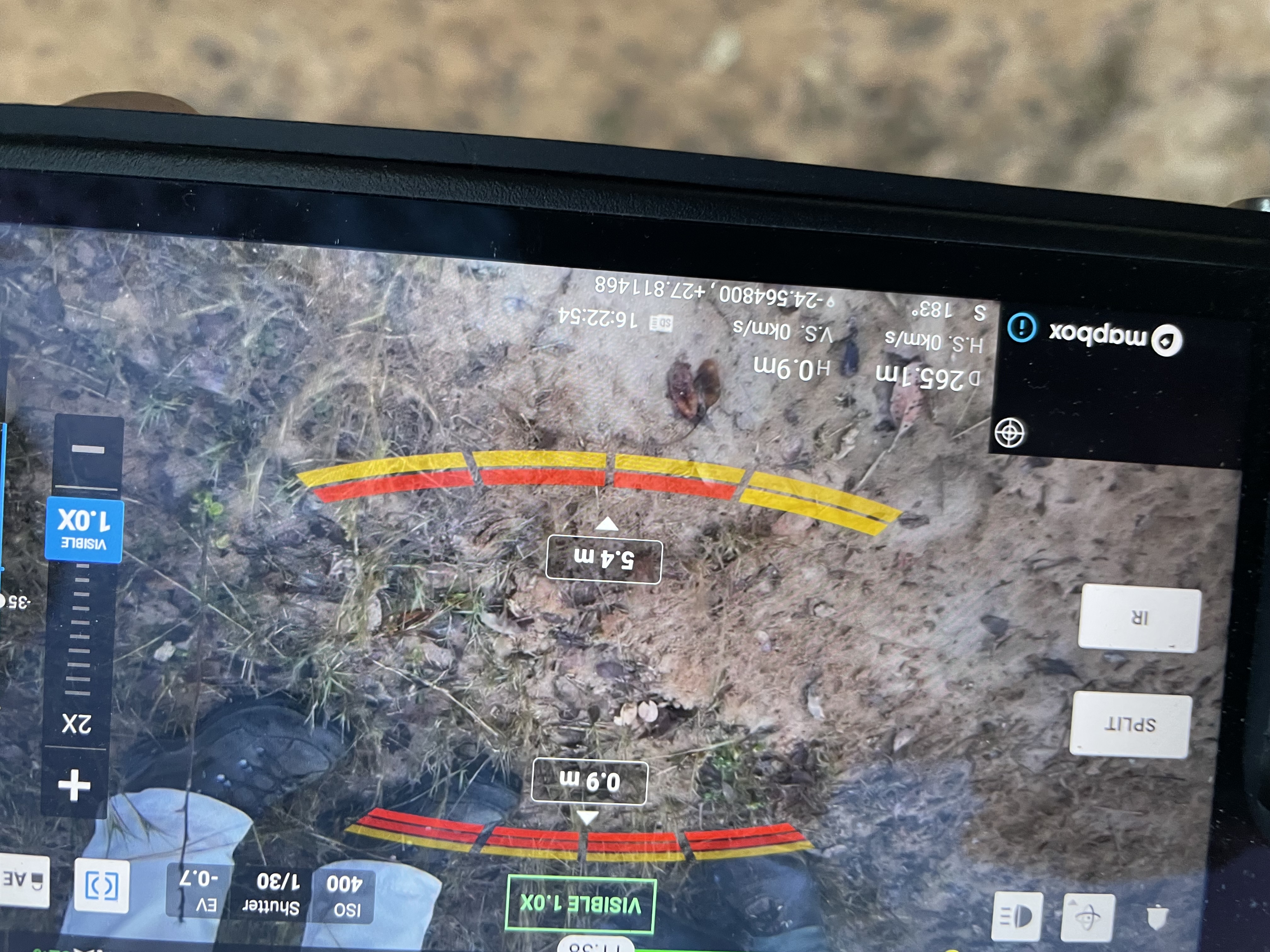
21 June — Went out at 5:30 to track leopards. Flew the thermal drone. Found only one leopard spoor, around two days old.
24 June — Two giraffes outside the lodge today, staring in on me eating breakfast. Finished building the leopard hide and raked the sand in case a leopard passes. Went out twice today. Tommy wanted to shoot an injured warthog for leopard baiting at the hide — he'd seen it two days prior, with an open back and teeth marks on its neck, likely from a leopard attack. Why hadn't the leopard caught it? After an hour of driving we still hadn't found it. We went out again in the afternoon for two hours, rifle in hand — nothing. A jackal probably got to it before us.
Nature is teaching me its way and its rhythm. Everything is slower here. I forget the day of the week, and read the hour of the day by the height of the sun. Just how artificial is the urban drive of "fastness" we've created?
26 June — Found fresh leopard spoor this morning, along the West Fence. Male spoor (A = 9.4 cm).
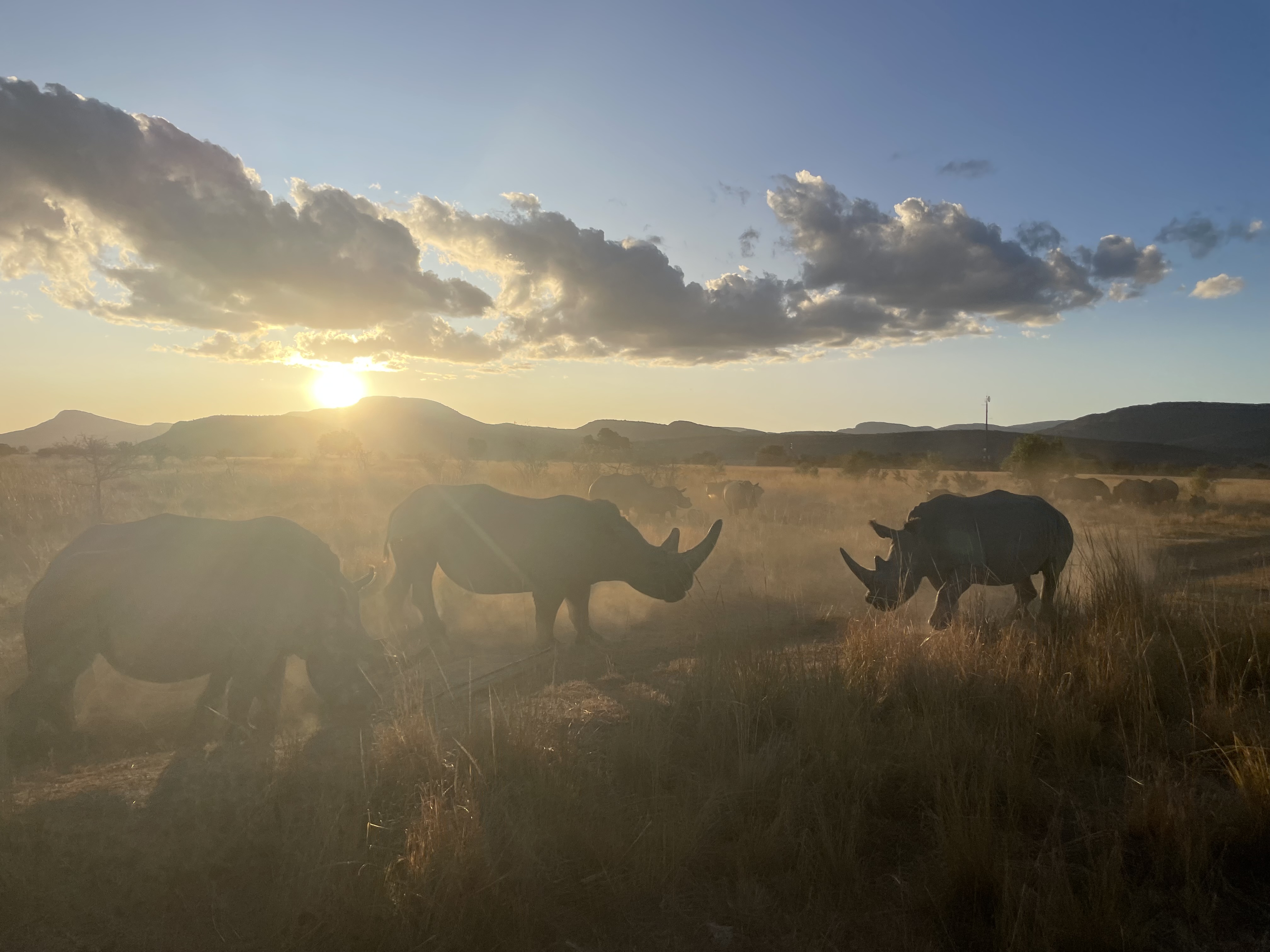
27 June — Went out early to set up cameras where we suspect the leopards to be. This afternoon, rhinos were grazing in front of the main lodge — three meters from us. It was beautiful. I mean, how many people get to see that?
29 June — Went out this afternoon to take three plaster-of-paris prints of leopard spoor. Found brown hyena and black-backed jackal spoor as well.
Side note: brown hyena spoor is hard to differentiate from leopard spoor, but I'm starting to see the differences within seconds now. Brown hyena: slanted, angled pad, not as wide as a leopard's, only two pad indents rather than three, longer and sharper toes, claws often visible.


